
A Standard-Baustahlblech kann Ihren Hersteller erreichen in zwei Tagen. Eine DFARS-zertifizierte Speziallegierung kann dauern acht Wochen. Beides fällt unter “Materialbeschaffungszeit” — und die Lücke dazwischen ist der Bereich, in dem sich die meisten Projektverzögerungen verbergen.
Dieser Glossareintrag erklärt was die Materialbeschaffungszeit tatsächlich umfasst, wie sie sich in einzelne Phasen aufteilt und was Einkäufer in der Angebotsphase tun können, um realistische Erwartungen zu setzen.
Was die Materialbeschaffungszeit tatsächlich umfasst
Wo sie beginnt und endet
Die Materialbeschaffungszeit ist die verstrichene Kalenderzeit von der Ausstellung einer Bestellung (PO) bei einem Materiallieferanten bis zum Eintreffen des Materials am Standort des Herstellers und dem Bestehen der Wareneingangsprüfung. Sie umfasst nicht die Zeit, die das Material in der Warteschlange verbringt, bevor die Fertigung beginnt — das ist die Produktionsvorlaufzeit.
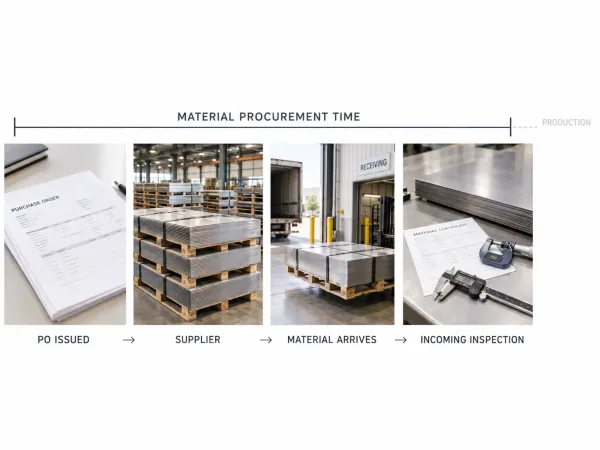
Die Materialbeschaffungszeit endet nach dem Eintreffen des Materials und dem Bestehen der Wareneingangsprüfung.
Diese Unterscheidung ist wichtig. Ein Lieferant kann Material in drei Tagen versenden, aber wenn es weitere zwei Tage im Wareneingang auf die Prüfung und Dokumentenverifizierung wartet, beträgt die effektive Beschaffungszeit fünf Tage, nicht drei.
Wie sie sich von Vorlaufzeit, Lieferzeit und Produktionsvorlaufzeit unterscheidet
Diese Begriffe überschneiden sich im alltäglichen Sprachgebrauch, aber sie messen unterschiedliche Segmente des Auftrags-bis-Lieferung-Zyklus:
| Begriff | Was es misst | Typischer Startpunkt | Typischer Endpunkt |
|---|---|---|---|
| Materialbeschaffungszeit | Beschaffung und Wareneingang von Rohmaterial | Bestellung an Materiallieferanten ausgestellt | Material trifft beim Hersteller ein |
| Lieferantenvorlaufzeit | Gesamter Erfüllungszyklus des Lieferanten | Bestellung vom Lieferanten erhalten | Ware vom Lieferanten versandt |
| Produktions-Vorlaufzeit | Fertigung des fertigen Teils | Arbeitsauftrag freigegeben | Teil fertiggestellt und geprüft |
| Liefervorlaufzeit | Transport fertiger Teile | Teile werden vom Hersteller versandt | Teile treffen am Standort des Käufers ein |
Die Materialbeschaffungszeit ist eine Teilmenge der Gesamtvorlaufzeit. In vielen individuellen Blechbearbeitungsprojekten, ist sie die größte einzelne Zeitkomponente — oft länger als die eigentliche Fertigung.
Die Phasen innerhalb der Materialbeschaffungszeit
Die Beschaffungszeit ist nicht eine einzelne Wartezeit. Sie besteht aus vier sequenziellen Phasen, jede mit eigener Dauer und eigenen Risikofaktoren.
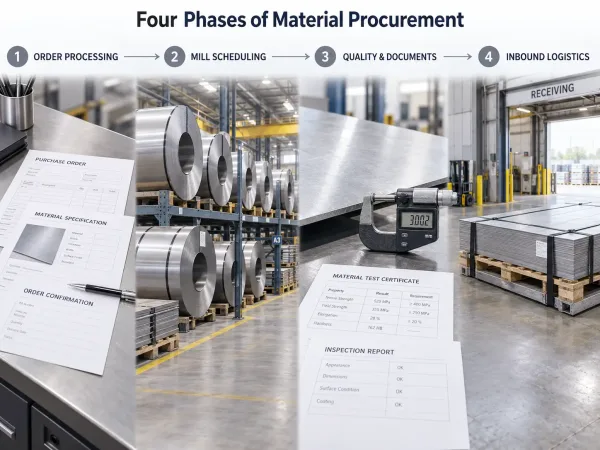
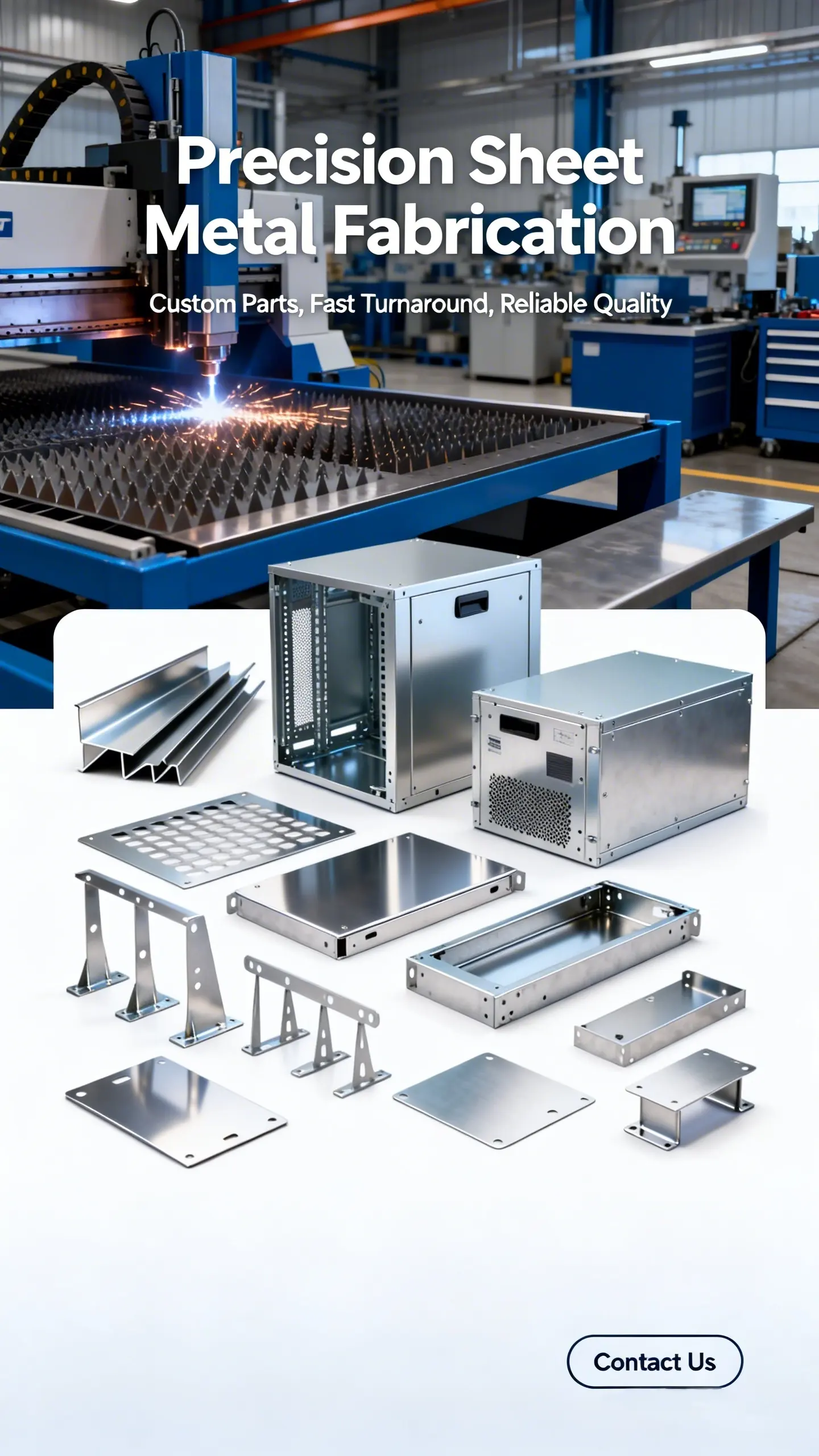
Die vier sequenziellen Phasen der Materialbeschaffung von der Auftragsbearbeitung bis zur Eingangslogistik.
Auftragsbearbeitung
Diese Phase beginnt, wenn das Einkaufsteam des Herstellers eine Bestellung an den Materiallieferanten sendet, und endet, wenn der Lieferant den Auftrag bestätigt und sich auf ein Versanddatum festlegt. Bei Lagerartikeln von einem bekannten Distributor kann dies dauern ein bis zwei Werktage. For mill orders or specialty materials, order processing may include confirming alloy availability, production scheduling, and lead time quotation — which can extend this phase to one to two weeks.
Mill Scheduling and Production
If the required material is not held in distributor or mill stock, the supplier must schedule a production run. This is the most variable phase. A common-grade hot-rolled steel coil may slot into the next rolling cycle within days. A specialty stainless steel temper or a non-standard thickness may wait weeks for the next compatible mill run.
Mill scheduling is influenced by the supplier’s current order backlog, the complexity of the alloy specification, and whether the required material shares a production run with other orders. Minimum order quantities (MOQs) also apply — ordering below the MOQ may mean waiting until the mill accumulates enough demand to justify a run.
Quality Inspection and Documentation
Before material ships, it undergoes quality inspection and documentation. This typically includes:
- Dimensional verification — confirming thickness, width, and length meet specification
- Material Test Certificate (MTC) — documenting chemical composition and mechanical properties per EN 10204 or equivalent standards
- Surface condition inspection — checking for scratches, scale, or contamination
For standard commercial-grade material, this phase may add one to three days. For material requiring EN 10204 Type 3.1 or 3.2 certificates, third-party inspection, or additional testing (e.g., ultrasonic testing for critical applications), the documentation phase can extend to five to ten days.
Inbound Logistics
The final phase covers physical transport from the supplier to the manufacturer’s facility. Domestic shipments from a regional distributor typically arrive in one to three days. International shipments — including ocean freight, port handling, and customs clearance — can add two to eight weeks depending on origin, shipping method, and destination port congestion.
Typische Zeitrahmen nach Materialszenario
The single most common question buyers ask is: “How long will it take?” The answer depends on which of three procurement scenarios applies.
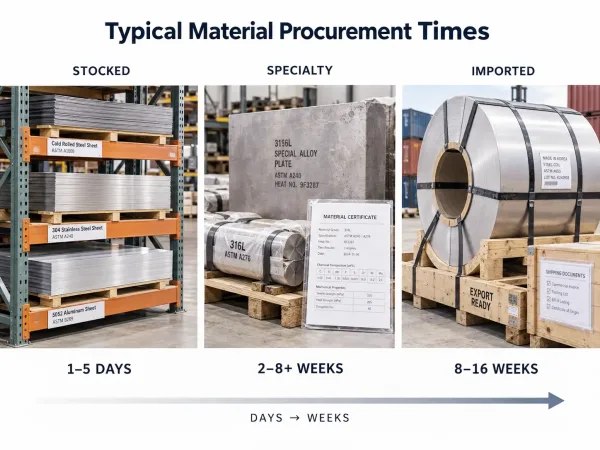
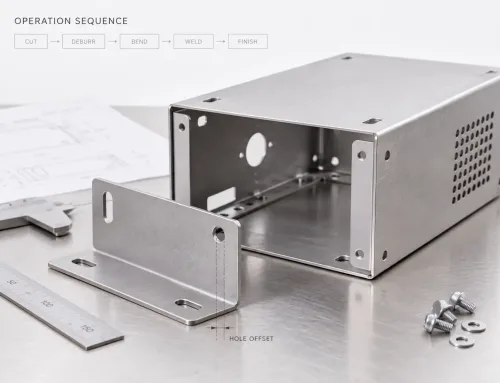
Typical procurement timelines vary significantly between stocked, specialty, and imported materials.
Stocked Standard Materials
Common grades and gauges held in distributor inventory move fastest. Typical examples in sheet metal fabrication:
- Kaltgewalzter Stahl (CRS), standard gauges (0.8–3.0 mm): 1–3 days from regional distributor
- 304 stainless steel, common gauges and finishes (2B, No. 4): 2–5 Tagen from distributor stock
- 5052-H32 aluminum, standard sheet sizes: 1–3 days from distributor stock
- Verzinkter Stahl, common coatings (G60, G90): 1–5 days depending on location
These timelines assume the manufacturer has an established purchasing relationship with the distributor and the exact specification matches what is on the shelf.
Specialty Alloys and Non-Standard Specifications
When the drawing calls for a material that distributors do not routinely stock, procurement time extends significantly:
- 316L stainless steel, thick gauge (6 mm+): 2–4 weeks — low turnover means distributors rarely hold inventory
- Specialty aluminum tempers (e.g., 7075-T6): 1–3 Wochen — batch production cycles at the mill
- Non-standard thicknesses (e.g., 2.5 mm when standard is 2.0 or 3.0 mm): 2–6 weeks — requires a dedicated mill order
- Inconel, titanium, or Hastelloy: 3–8 weeks or longer — limited supplier base and long mill lead times
A single specification change — from 304 to 316L, from standard thickness to a non-standard gauge, or from commercial-grade to DFARS-compliant material — can shift procurement time from days to weeks.
Imported Materials and Overseas Mill Orders
When material must be sourced from an overseas mill, procurement time includes additional phases that domestic orders do not:
- Mill production scheduling: 2–4 weeks (varies by mill backlog)
- Production and finishing: 2–5 weeks (rolling, annealing, surface treatment)
- Export documentation and port handling: 1–2 weeks
- Ocean freight: 2–4 weeks (Southeast Asia to North America or Europe)
- Import customs clearance: 3–7 days
Total imported material procurement time typically ranges from 8 to 16 weeks, compared to days or a few weeks for domestic sourcing. Buyers who need imported material should plan procurement as the first critical path activity in their project timeline.
Was die Materialbeschaffungszeit verlängert
Several factors can push procurement time beyond the typical ranges. Understanding them at the design stage — before drawings are released — gives buyers and engineers the chance to make procurement-friendly decisions.
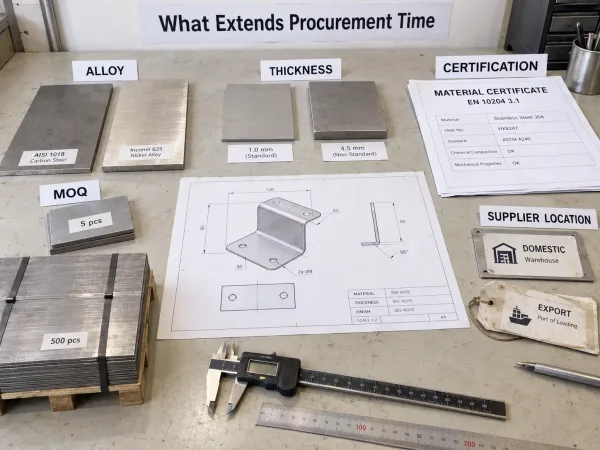
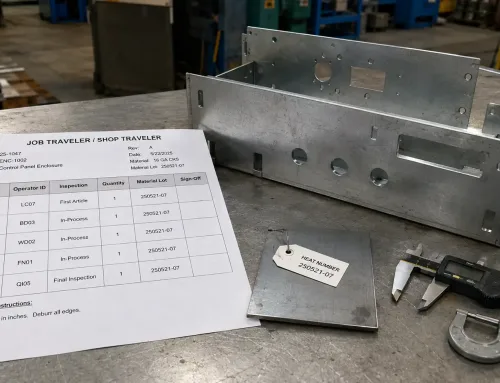
Special alloys, non-standard specifications, certifications, order quantities, and supplier location can extend procurement time.
Material Type and Alloy Grade
The more specialized the alloy, the fewer suppliers carry it in stock. Standard mild steel (ASTM A36, A1008) is available from dozens of distributors in every major industrial region. Duplex stainless steel (2205) or precipitation-hardening alloys (17-4 PH) may require sourcing from a single specialty mill with a six-week backlog.
Non-Standard Thickness, Temper, or Surface Finish
Standard gauges roll off production lines continuously. A non-standard thickness — say 2.5 mm when the mill’s standard schedule runs 2.0 mm and 3.0 mm — requires a dedicated setup or a wait until the next compatible run. Similarly, specifying a particular temper (H32 vs. H34) or a pre-finished surface (pre-anodized, pre-painted) limits the supplier pool and adds processing time.
Zertifizierungs- und Konformitätsanforderungen
Material certifications add documentation time and may limit sourcing options:
- EN 10204 Type 3.1 (inspection certificate from the mill): adds 3–7 days for documentation
- EN 10204 Type 3.2 (third-party inspection): adds 1–2 weeks
- DFARS-compliant material (for U.S. defense contracts): requires sourcing from approved countries, which may exclude low-cost Asian mills and extend procurement time by 2–6 weeks
- RoHS or REACH compliance: generally does not add significant time for standard metals but may require additional documentation
Order Quantity and Supplier Location
Small orders below the supplier’s MOQ may not justify a dedicated mill run, forcing the buyer to wait until the mill accumulates enough demand. Conversely, very large orders may exceed a single mill’s capacity and require splitting across multiple sources, adding coordination time.
Geographic distance between the material supplier and the manufacturer also matters. A domestic distributor can deliver in one to three days; an overseas mill order includes weeks of freight transit.
Wie sich die Beschaffungszeit auf Ihren Projektzeitplan auswirkt
Material procurement time does not exist in isolation — it cascades through the entire project schedule. When procurement takes longer than expected, the effects multiply:
- Quote validity pressure: Most manufacturing quotes are valid for 14–30 days. If material procurement exceeds this window, the quoted price may need to be repriced to reflect current material costs.
- Production scheduling delay: Fabrication cannot begin until material arrives and passes incoming inspection. A two-week procurement delay pushes the entire production schedule back by at least two weeks.
- Compressed inspection time: When material arrives late, there is pressure to rush first article inspection (FAI) and quality documentation — which increases the risk of errors reaching the customer.
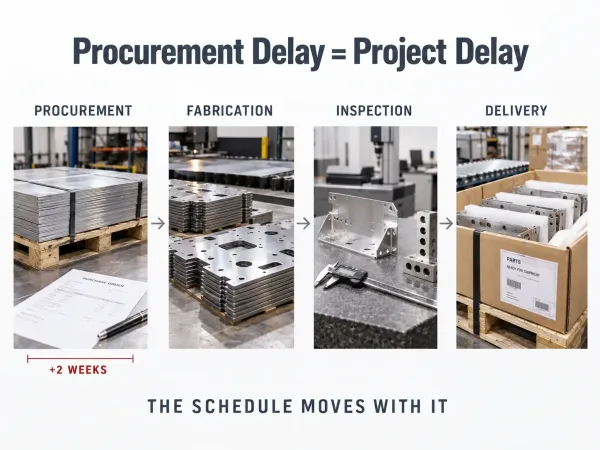
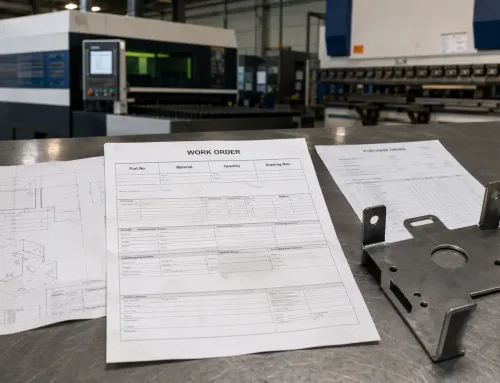
A procurement delay shifts fabrication, inspection, and final delivery later in the project schedule.
For projects with fixed delivery dates — product launches, trade shows, or contractual commitments — the procurement phase is often the most critical path item. Starting material procurement before or concurrent with the quoting process can compress the overall timeline by weeks.
Was Einkäufer vor der Auftragserteilung tun können
Procurement time is not entirely outside the buyer’s control. Several actions at the RFQ and ordering stage can shorten the timeline or prevent surprises.
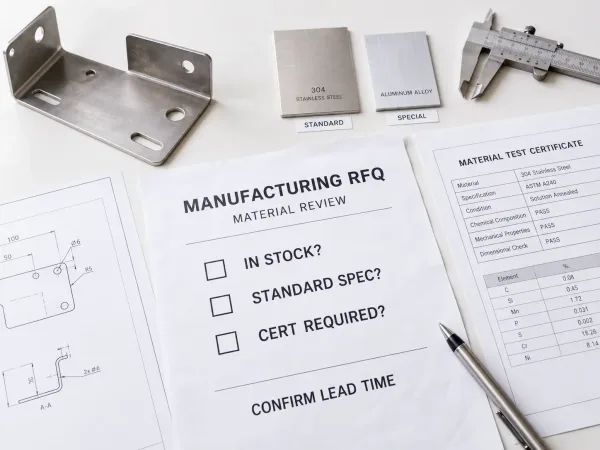
Reviewing material availability, specifications, and certification requirements during RFQ helps reduce procurement risk.
Confirm Material Availability at the RFQ Stage
Before requesting a quote, confirm material availability by asking the manufacturer: “Is this material in stock, or does it need to be ordered?” This single question shifts procurement planning from a reactive surprise to a proactive decision. If the material requires a mill order, the manufacturer can include realistic procurement time in the quoted lead time — and the buyer can decide whether to proceed, adjust specifications, or explore alternatives.
Evaluate Specification Flexibility
Review the material specification on the drawing and ask whether minor adjustments could improve procurement time without affecting part function:
- Dicke: Can a non-standard gauge (e.g., 2.5 mm) be changed to a standard one (2.0 or 3.0 mm)?
- Alloy grade: Is the specified grade functionally required, or would a more commonly stocked equivalent work?
- Certification: Is a Type 3.2 third-party certificate necessary, or would a Type 3.1 mill certificate suffice?
These decisions are engineering trade-offs, not compromises. A relaxed thickness tolerance on a non-critical feature may save two weeks of procurement time with no functional impact.
Understand How Drawings Affect Procurement Time
Every specification on a drawing is a procurement constraint. The more constraints, the smaller the supplier pool, and the longer the procurement time. Engineers who understand this relationship can make informed decisions about which specifications are functionally critical and which are default settings that can be relaxed.
At the RFQ stage, a manufacturer’s engineering team can review the drawing and flag specifications that are likely to extend procurement time — before the PO is issued and the clock starts ticking.
FAQ