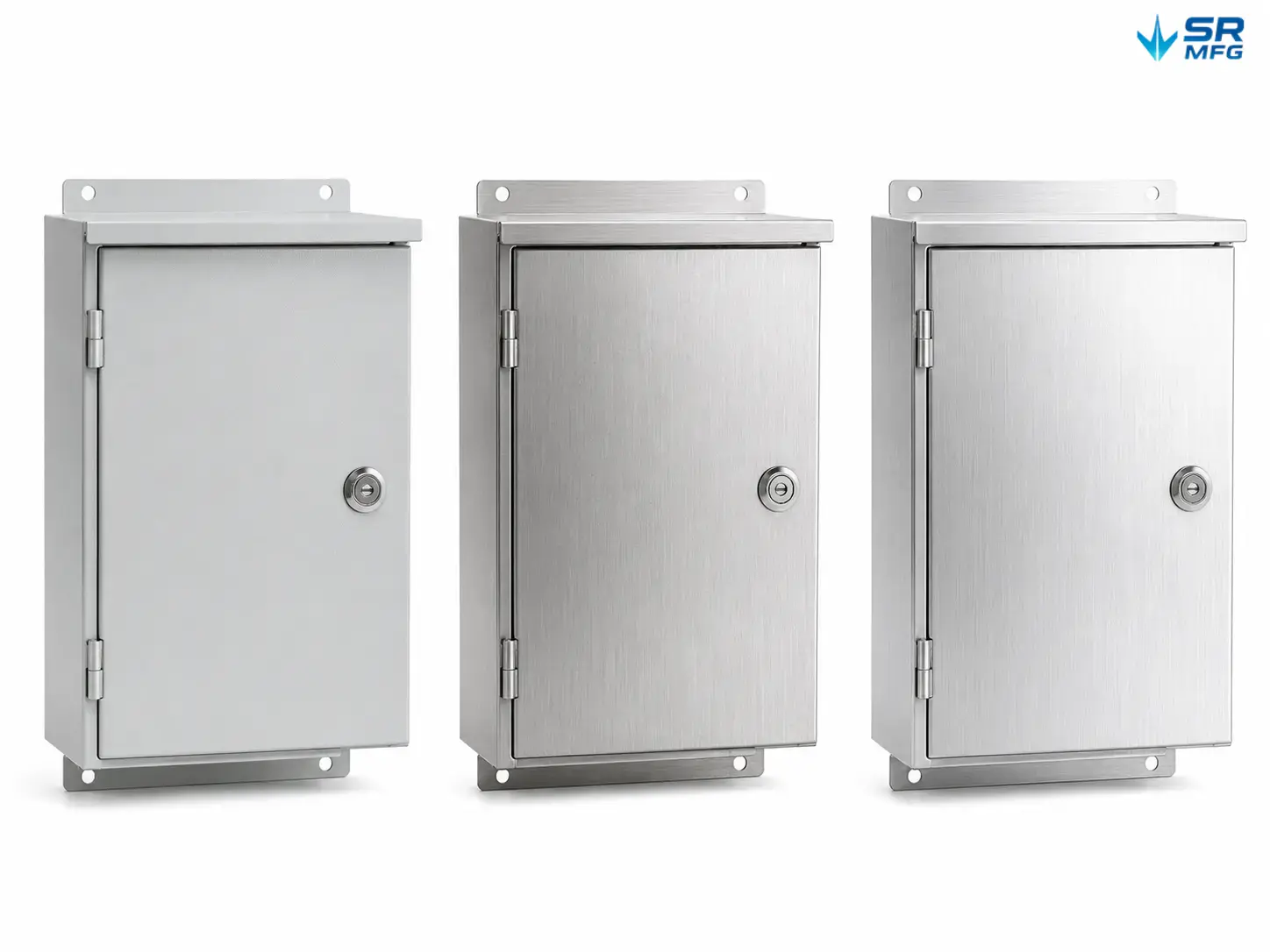
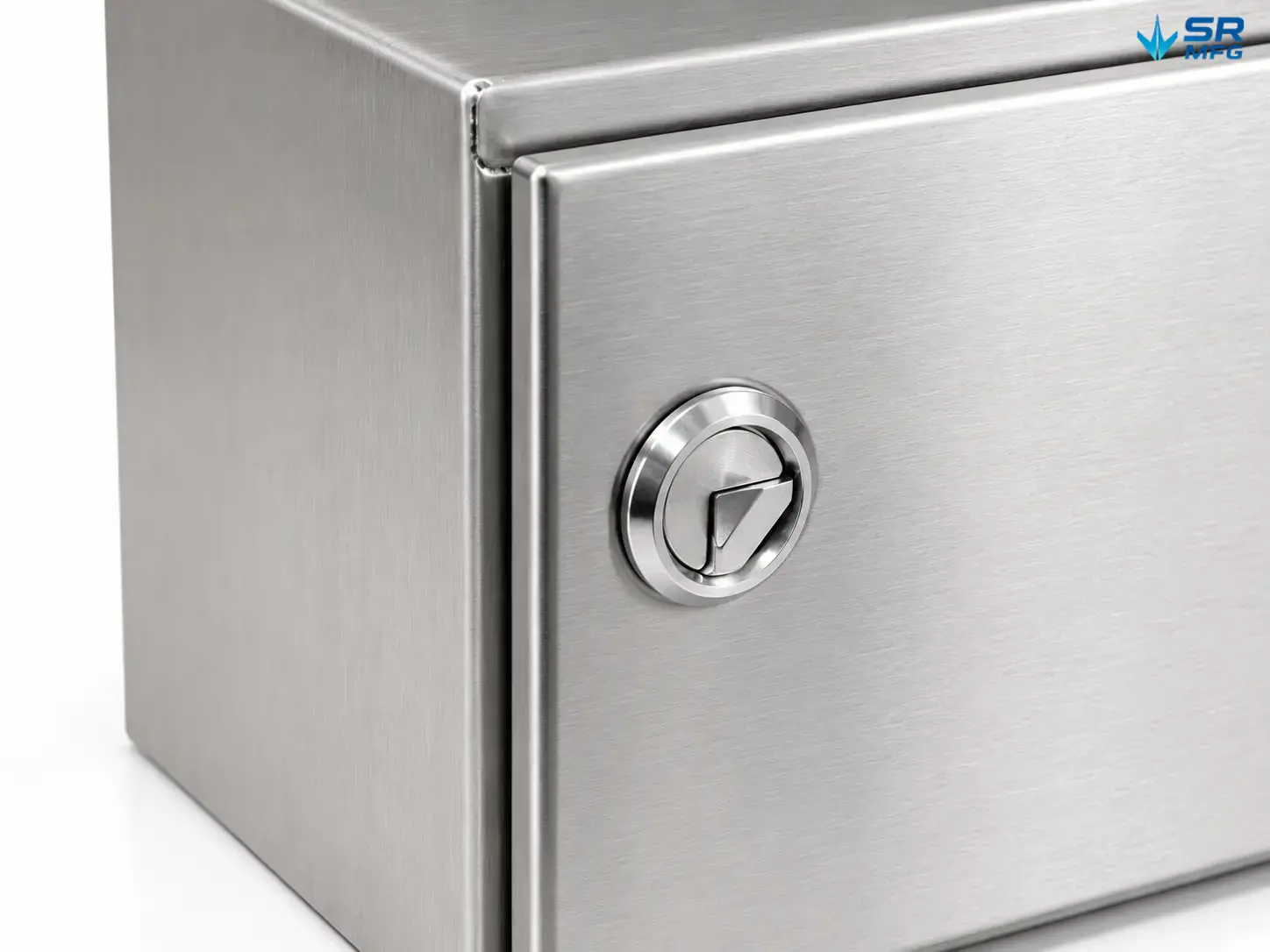
Outdoor-Abzweigdosen-Gehäuse
Jedes Gehäuse für Außenanschlussdosen wird von SR-MFG im eigenen Haus gefertigt, was uns die direkte Kontrolle über Materialauswahl, Fertigung, Schweißen, Oberflächenbehandlung, Montage und Qualitätsprüfung gibt.
- Verfügbare Materialien sind 304 Edelstahl, 316 Edelstahl, kaltgewalzter Stahl und 5052 Aluminium
- Durchgehend kehlnahtgeschweißte Gehäusekonstruktion
- Zweikanal-Dichtungsabdichtung
- Verfügbare Schutzarten von IP54 bis IP67
- Jede Komponente kann für OEM-Anwendungen individuell angepasst werden
Produkt Details
| Parameter | Spezifikation |
|---|---|
| Gehäusematerial | Kohlenstoffstahl / 304 Edelstahl / 316 Edelstahl |
| Gehäuseblechdicke | 1,0 mm / 1,2 mm / 1,5 mm / 2,0 mm, ausgewählt nach Gehäusegröße und Anwendung |
| Türblechdicke | 1,2 mm / 1,5 mm / 2,0 mm, abgestimmt auf die Gehäusekörperdicke |
| Montageplattenmaterial | Verzinkter Stahl, Standard / Edelstahl, optional |
| Montageplattendicke | 1,5 mm / 2,0 mm / 2,5 mm |
| IP-Schutzart | IP66, Standard / IP67 auf Anfrage erhältlich |
| NEMA-Schutzart | NEMA 4X, Standard / NEMA 3R / NEMA 4 optional |
| Schlagfestigkeit | IK08 / IK10, abhängig von Blechdicke und Verstärkungsstruktur |
| Dichtungsmaterial | EPDM, Standard, −40 °C bis +120 °C / Silikon, −60 °C bis +200 °C / PU-Schaum |
| Schweißverfahren | Durchgehendes Schweißen mit glattgeschliffenen Nähten, WIG / MIG |
| Scharniertyp | Innenscharnier, abnehmbarer Stift, 120° Öffnungswinkel |
| Scharnirmaterial | 304 Edelstahl / Zinklegierung |
| Schlossart | Vierteldrehverschluss, Standard / Schlüsselvorhängeschloss / Vorhängeschloss-Öse |
| Oberflächenbehandlung | Epoxid-Polyester-Pulverbeschichtung / Feuerverzinkung / Gebürsteter Edelstahl |
| Betriebstemperatur | EPDM-Dichtung: −40 °C bis +85 °C; Silikondichtung: −60 °C bis +200 °C |
| Kabeleinführung | Vorgestanzte Ausbrüche an Boden und Seiten / Individuelle Ausschnitte |
| Erdung | Vorinstallierte Erdungsbolzen an Tür und Gehäusekörper |
| Zertifizierungen | CE / RoHS / UL 508A auf Anfrage erhältlich / IEC 60529 |
| Standardprodukt-Lieferzeit | 3–5 Werktage |
| Sonderanfertigung-Lieferzeit | 15–20 Werktage, abhängig von der Komplexität |
Entwickelt für den elektrischen Außenschutz
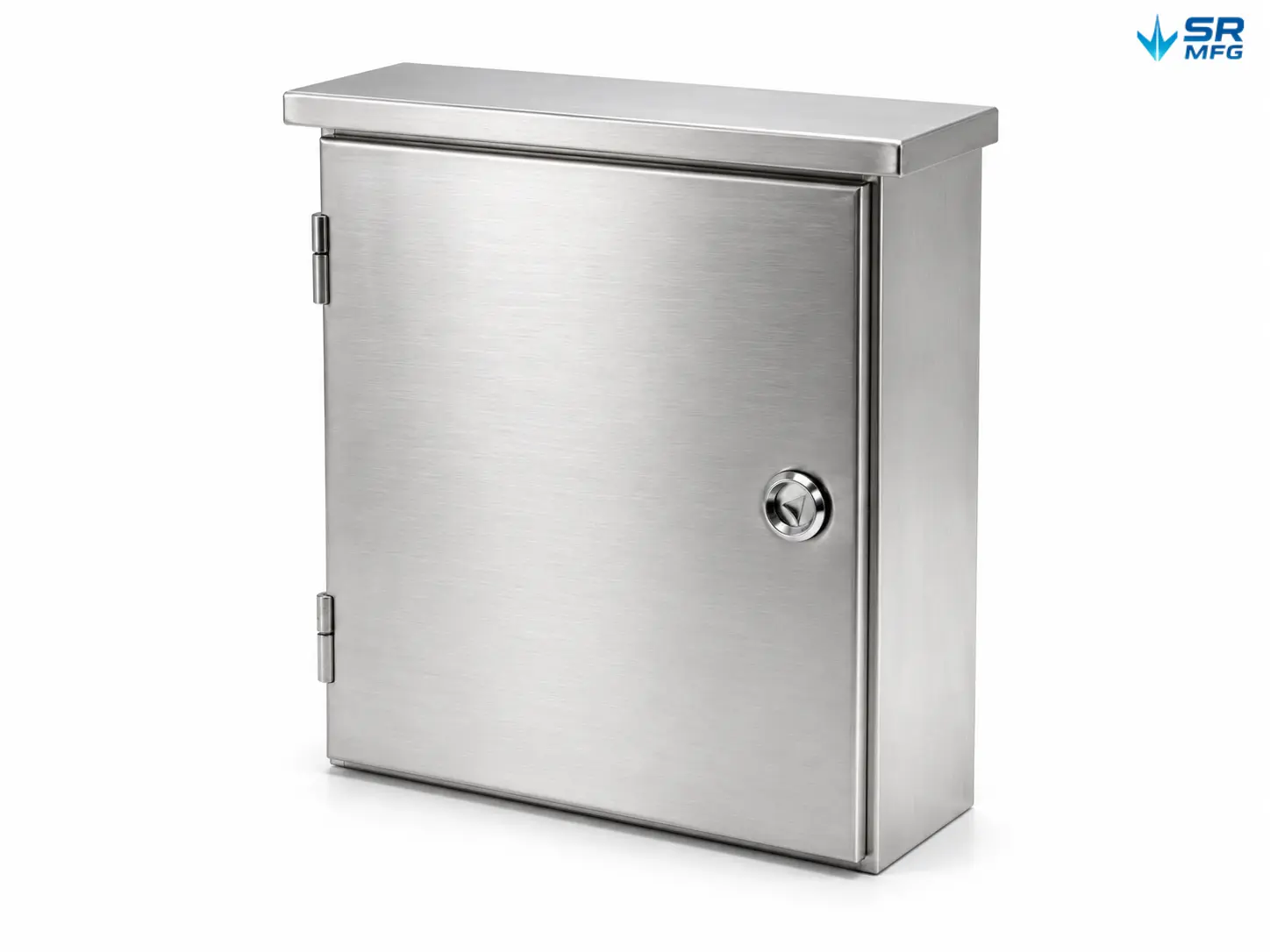
Ein Gehäuse für Außenanschlussdosen schützt Kabelverbindungen, Klemmenblöcke und Feldverdrahtungsanschlüsse vor Regen, Staub, UV-Strahlung und mechanischen Einwirkungen. Im Gegensatz zu Kunststoffgehäusen, die mit der Zeit spröde werden können, behalten Metallgehäuse ihre strukturelle Integrität über wiederholte Temperaturzyklen hinweg bei und bieten gleichzeitig inhärente elektromagnetische Abschirmung für empfindliche Schaltkreise.
Wir fertigen diese Gehäuse durch kundenspezifische Blechfertigung unter Verwendung von kaltgewalztem Stahl- oder Edelstahlblech, das auf CNC-Abkantpressen geformt und durchgehend verschweißt wird, um eine abgedichtete, starre Gehäusestruktur zu schaffen. Jedes Gehäuse ist dafür ausgelegt, elektrische Komponenten in exponierten Umgebungen aufzunehmen, von Versorgungsmast-Anschlusspunkten und Solar-Array-Combiner-Boxen bis hin zu industriellen Feldverdrahtungsanschlüssen.
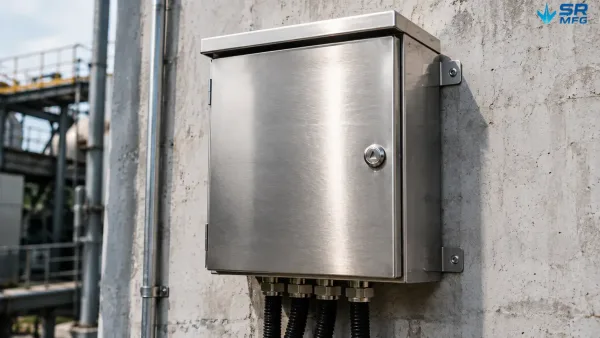
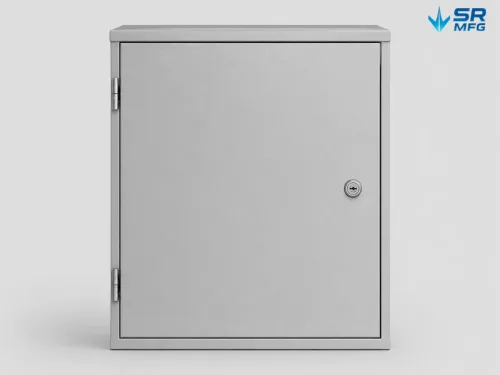
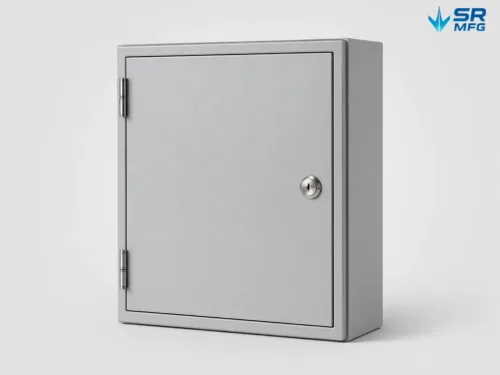
Dieses Bild zeigt ein Gehäuse für Außenanschlussdosen, das elektrische Verbindungen in einer exponierten industriellen Umgebung schützt.
Materialauswahl: Den richtigen Stahl für Ihre Umgebung wählen
Das gewählte Material beeinflusst direkt die Korrosionsbeständigkeit, das Gewicht, die Kosten und die Lebensdauer. Die drei Standardmaterialoptionen werden unten verglichen:
| Eigenschaft | Kohlenstoffstahl | Edelstahl 304 | Edelstahl 316 |
|---|---|---|---|
| Korrosionsbeständigkeit | Mäßig, mit Schutzbeschichtung | Hoch | Sehr hoch |
| Am besten geeignet für | Allgemeine Außen- und geschützte Industrieumgebungen | Küsten-, lebensmittelgerechte und chemisch exponierte Umgebungen | Marine-, Offshore- und stark korrosive chemische Umgebungen |
| Oberflächenbehandlung | Pulverbeschichtung oder Verzinkung | Gebürstet oder passiviert | Gebürstet oder elektropoliert |
| Relativer Kostenaufwand | Basiswert | Ca. 1,8× | Ca. 2,5× |
| Typische Blechdicke | 1,0–2,0 mm | 1,0–2,0 mm | 1,2–2,0 mm |
Für die meisten Außeninstallationen in gemäßigten Klimazonen bietet pulverbeschichteter Kohlenstoffstahl zuverlässige Leistung bei niedrigsten Kosten.
Bei Salzsprühnebel, chemischer Abspülung oder Hygieneanforderungen ist Edelstahl 304 typischerweise die Standard-Aufwertung.
Für Marineumgebungen oder Anwendungen, die Chloriden und Säuren ausgesetzt sind, bietet Edelstahl 316 die längste Lebensdauer.
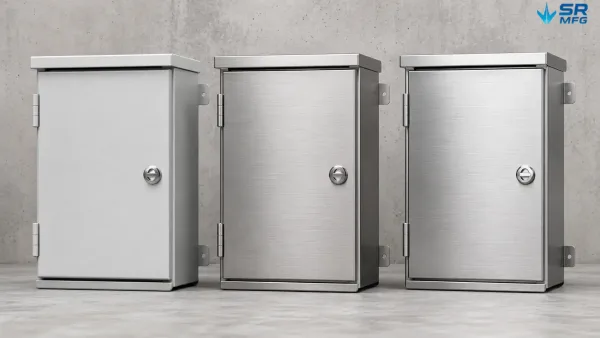
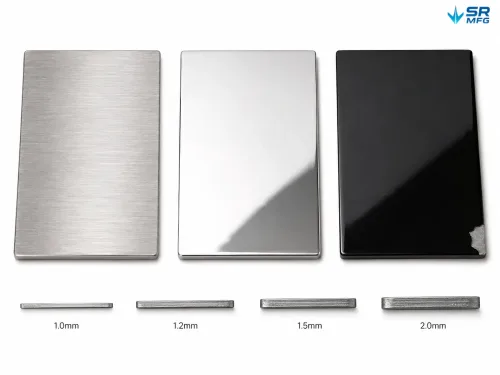
Dieses Bild vergleicht drei Materialoptionen für dasselbe Außen-Anschlussdose-Gehäuse.
Wenn Sie unsicher sind, welches Material für Ihr Projekt am besten geeignet ist, senden Sie uns Details zu Ihrer Installationsumgebung und wir empfehlen die am besten geeignete Konfiguration.
IP66 / NEMA 4X Dichtungssystem
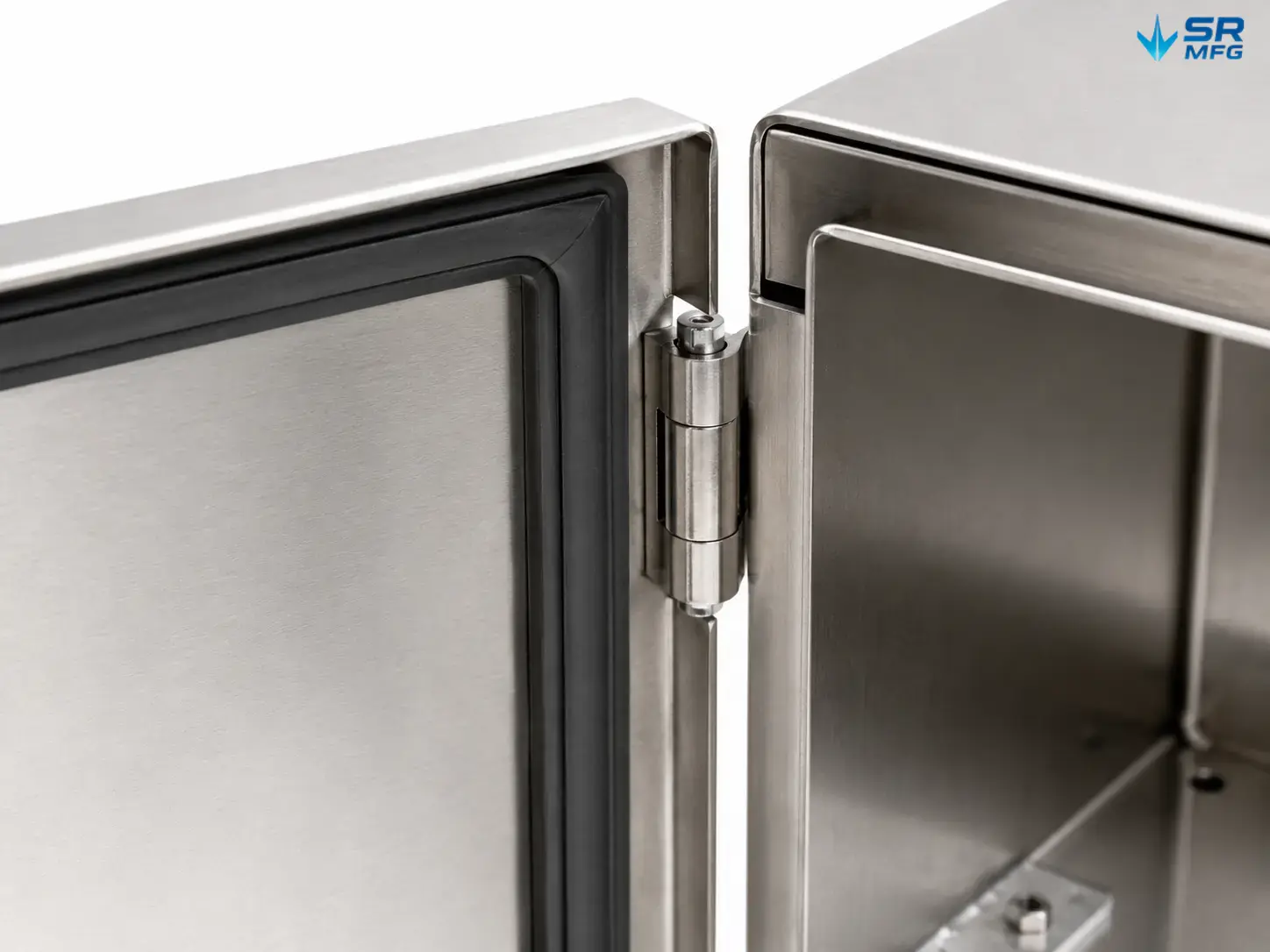
Das Dichtungssystem ist das, was ein außentaugliches Gehäuse von einer einfachen Metallbox unterscheidet. Unser Dichtungsdesign verwendet eine durchgehende Dichtung, die in einem vollständig geformten Kanal um den gesamten Türumfang sitzt.
· Dichtungsmaterialien: EPDM für allgemeine Außenanwendungen, −40 °C bis +120 °C; Silikon für einen breiteren Temperaturbereich, −60 °C bis +200 °C; Polyurethanschaum für hohe Druckrückstellung
· Dichtungsdesign: Durchgehender Umfangsdichtungskanal ohne Lücken an den Ecken und ohne klebstoffabhängige Verbindungen
· Druckkontrolle: Gleichmäßiges Schrauben- oder Verriegelungsdrehmoment gewährleistet konsistente Dichtungskompression über die gesamte Türfläche
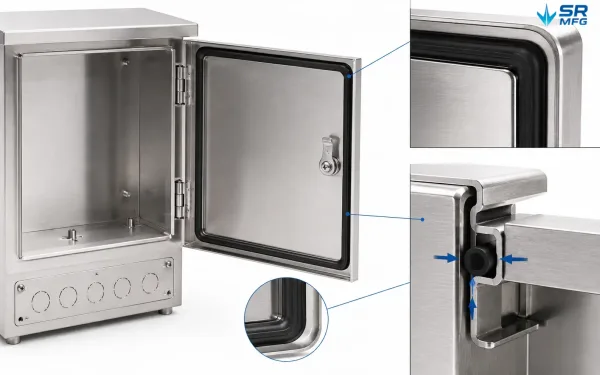
Dieses Bild zeigt, wie die durchgehende Dichtung die Gehäusetür gegen Staub und Wasser abdichtet.
Dieses Dichtungsdesign bietet standardmäßig IP66-Schutz, was bedeutet, dass das Gehäuse vollständig staubdicht und gegen starke Wasserstrahlen aus jeder Richtung beständig ist.
Für Anwendungen, die temporären Eintauchschutz erfordern, sind IP67-Konfigurationen auf Anfrage erhältlich.
NEMA 4X fügt den Staub- und Wasserschutzanforderungen Korrosionsbeständigkeitsanforderungen hinzu und ist eine der am häufigsten spezifizierten Schutzarten für elektrische Außenprojekte in Nordamerika.
Tür-, Scharnier- & Verriegelungsdesign
Das Zugangsdesign beeinflusst die tägliche Benutzerfreundlichkeit, Wartungshäufigkeit und Standortsicherheit. Wir bieten drei Türkonfigurationen:
Einfache Scharniertür
Geeignet für Standardgehäuse bis 600 mm Breite. Innenscharniere bieten einen Öffnungswinkel von 120° für vollen Zugang zum Innenraum. Die Scharniere sind abnehmbar, sodass die Türöffnungsrichtung vor Ort umgekehrt oder geändert werden kann.
Doppelte Scharniertür
Geeignet für Gehäuse breiter als 600 mm. Zwei Türen mit einer mittleren Dichtungsleiste bieten vollen Zugang zum Gehäuseinneren, ohne dass ein Türöffnungsradius größer als die Gehäusetiefe erforderlich ist.
Schraubdeckel
Geeignet für kompakte Gehäuse oder Installationen, bei denen der Zugang selten erfolgt. Dieses Design bietet ein niedrigeres Profil, weniger bewegliche Teile und niedrigere Kosten.
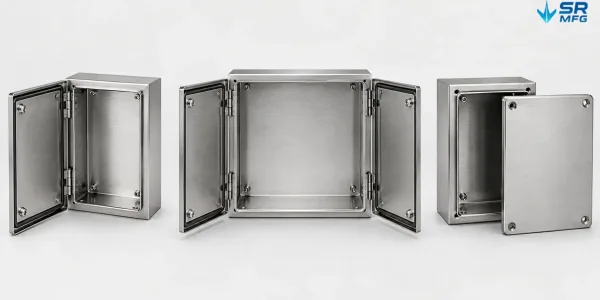
Dieses Bild vergleicht drei Türkonfigurationen, die für Außen-Anschlussdose-Gehäuse erhältlich sind.
Zur Sicherheit sind Vierteldrehverschlüsse standardmäßig angebracht. Sie sind werkzeugbetätigt und bieten ein gewisses Maß an Manipulationsschutz. Verriegelte Nockenverschlüsse und Vorhängeschlossbügel sind ebenfalls erhältlich.
Für Gehäuse mit 600 mm Höhe oder höher werden Türversteifungen hinzugefügt, um langfristiges Durchbiegen zu verhindern, das die Dichtungskompression verringern und die Dichtungsleistung beeinträchtigen könnte.
Innenkonfiguration & Kabeleinführung
Der Gehäuseinnenraum ist für vor Ort installierte elektrische Komponenten ausgelegt. Standard- und optionale interne Merkmale umfassen:
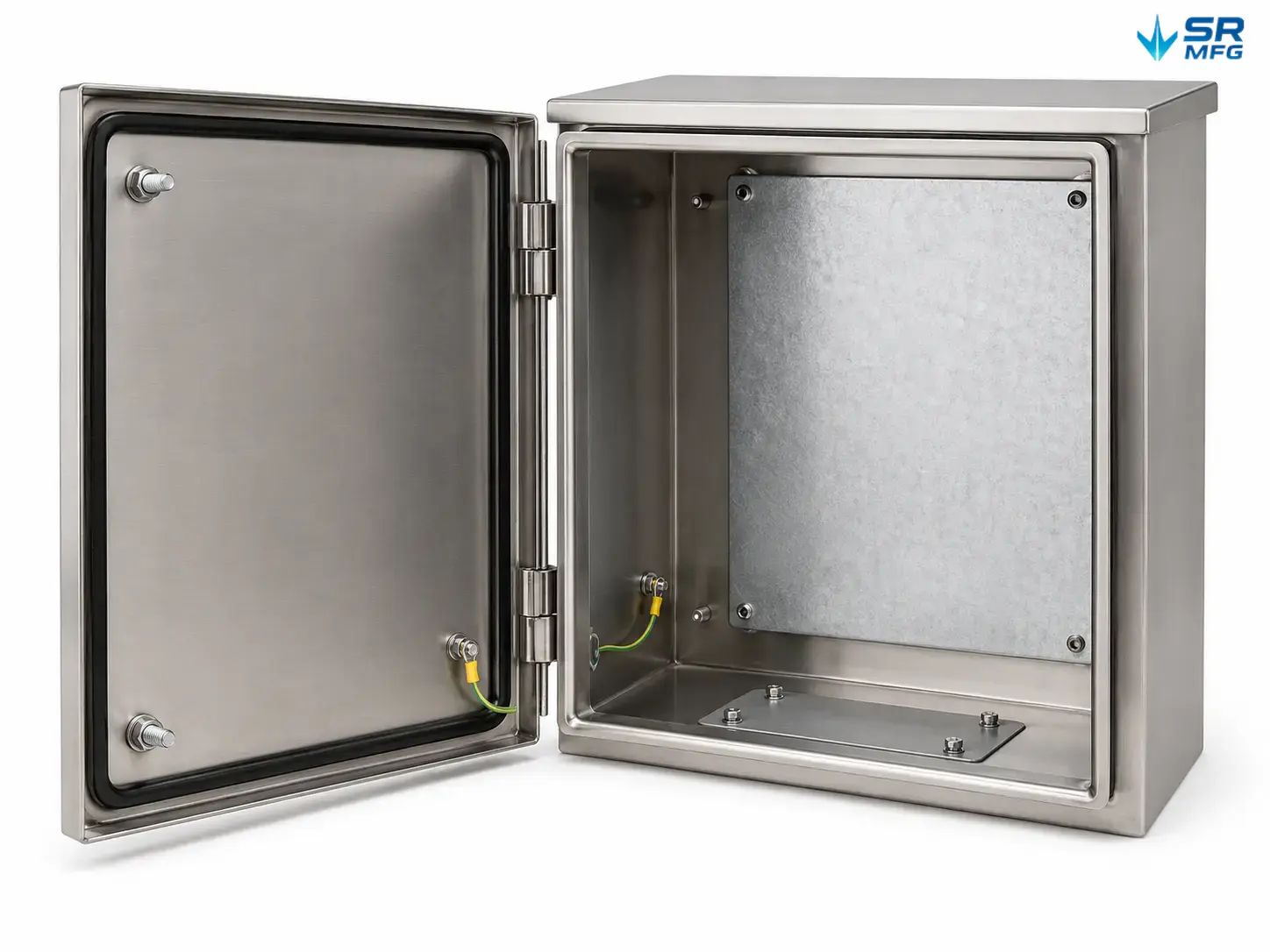
· Montageplatte — Abnehmbare verzinkte Stahlplatte mit einstellbarer Montagetiefe durch angeschweißte Bolzen. Plattendicke reicht von 1,5 mm bis 2,5 mm je nach erwarteter Belastung.
· DIN-Schienen-Unterstützung — Vorgebohrte Montagepunkte für 35-mm-DIN-Schieneninstallation für Leistungsschalter, Relais und Klemmenblöcke.
· Klemmenblock-Montage — Bracket positions can be configured for DIN-rail-mounted or panel-mounted terminal blocks.
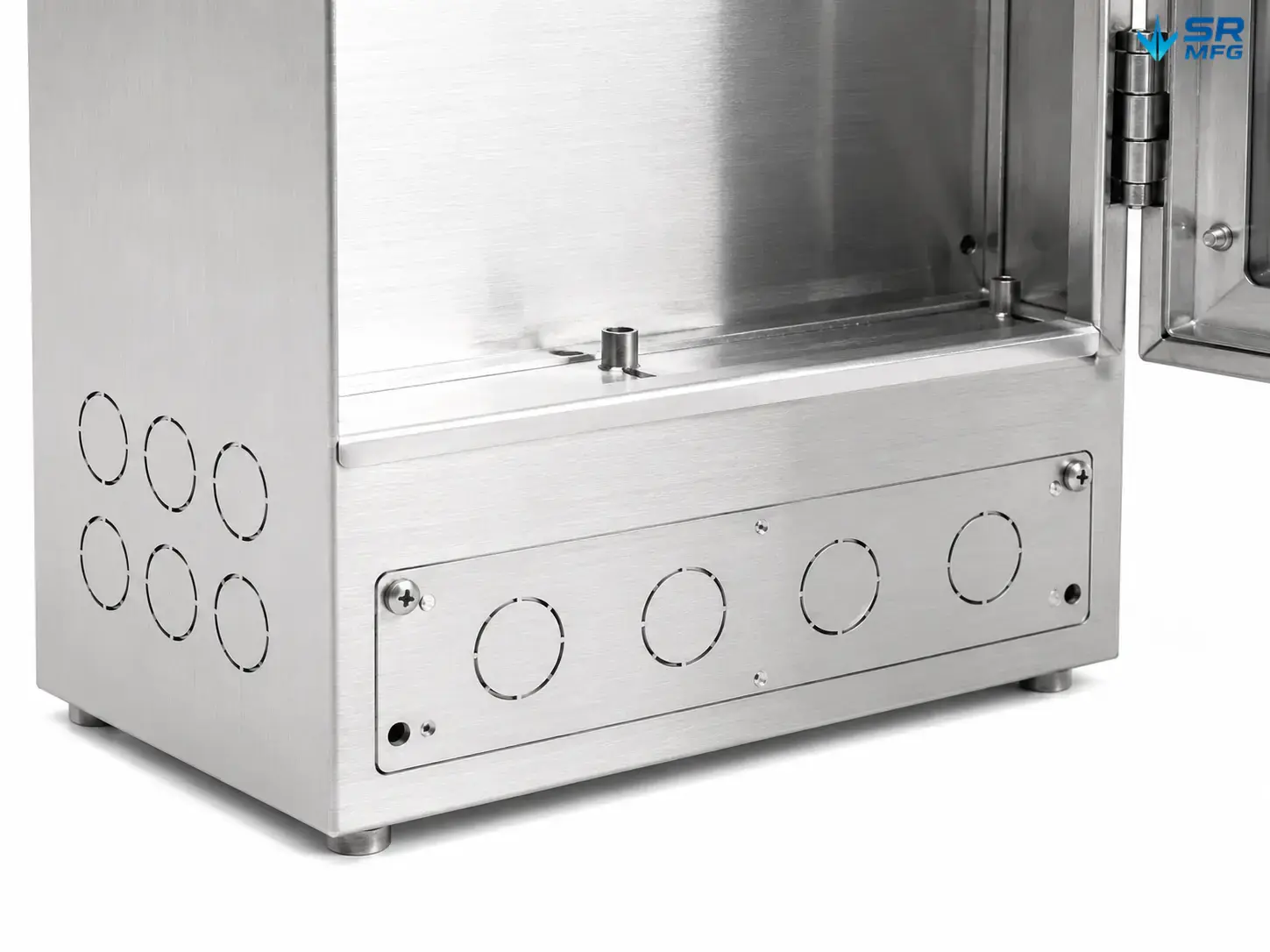
· Kabeleinführung — Pre-scored knockouts can be provided on the bottom and sides of the enclosure. Custom rectangular, round, or threaded gland holes can also be produced to match your cable gland specifications.
· Gland Plate — A removable gland plate is installed at the bottom of the enclosure, allowing cable gland holes to be drilled on site without compromising the seal of the main enclosure body.
· Erdung — Grounding studs are pre-installed on both the door and enclosure body for protective earthing in accordance with IEC 60204-1.
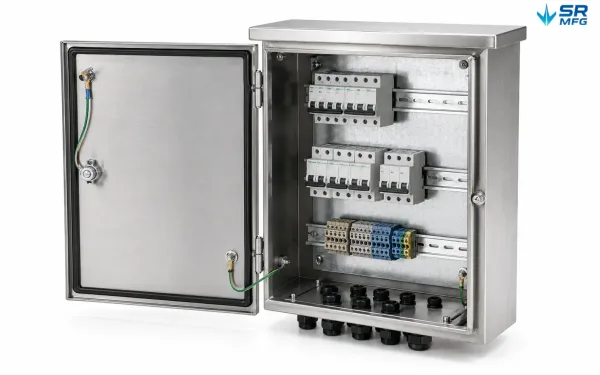
This image shows the mounting plate, DIN rail, terminal blocks, gland plate, and grounding points inside the enclosure.
The internal layout can be customized. Send us your component layout drawing and we can configure the mounting plate, cutouts, and DIN rail positions accordingly.
Custom Enclosure Solutions
Standard sizes cover the most common installation requirements. For custom junction boxes and related Schaltschränke für den Außenbereich requiring specific dimensions, cutouts, or internal configurations, we manufacture according to your specifications.
| Customization Area | Available Options |
|---|---|
| Abmessungen | Any combination of height, width, and depth within our forming capabilities |
| Cutouts | CNC-punched or laser-cut round holes, slots, and rectangular openings |
| Oberflächenbehandlung | Powder coating with RAL color matching; hot-dip galvanizing; brushing; anodizing |
| Internal Layout | Mounting plate hole patterns, DIN rail positions, terminal block brackets, gland plates |
| Door & Lock | Hinge type, lock type, handle style, viewing window |
| Branding | Silk-screened logos, laser-engraved labels, embossed nameplates |
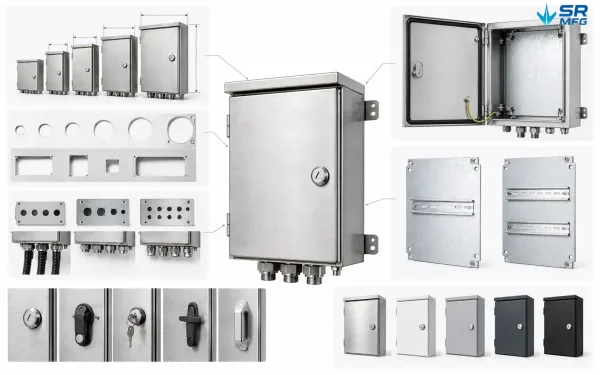
This image shows the main customization options available for an outdoor junction box enclosure.
Customization Process:
- Submit your drawing, sketch, or dimensional requirements.
- Our engineering team reviews the design for manufacturability at no charge.
- We provide a detailed quotation, lead time, and DFM recommendations.
- Once approved, prototype production typically takes 5–7 working days, followed by mass production.
This image shows the manufacturing workflow used to produce custom outdoor junction box enclosures.
We accept CAD files in DWG, DXF, STEP, and IGES formats. If you only have a sketch or dimensional table, we can also create a CAD model for your review.
Anwendungen
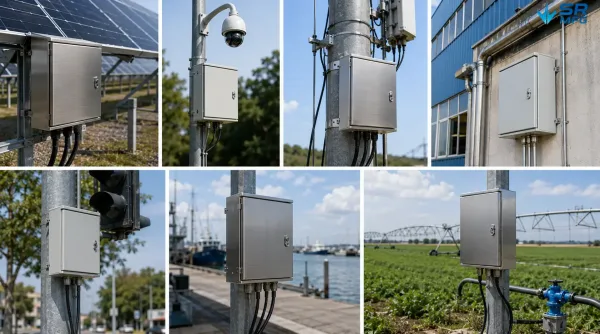
Across electrical industry applications, metal junction box enclosures are widely used wherever electrical connections need to be protected in outdoor or harsh environments while remaining accessible for maintenance:
· Solar & Renewable Energy — Combiner box enclosures, inverter junction points, and DC wiring splices in ground-mounted or rooftop solar arrays
· CCTV & Security Systems — Camera power and signal junctions, as well as outdoor access control wiring points
· Telecommunications — Outdoor fiber splice enclosures, antenna feed junction boxes, and base station wiring
· Industrielle Automatisierung — Field device wiring, sensor junction points, and motor starter enclosures installed on factory exteriors
· Infrastructure & Transportation — Traffic signal junction boxes, street lighting control boxes, and railway signaling enclosures
· Marine & Coastal Environments — Dock power distribution, offshore platform wiring, and harbor lighting junction boxes; 316 stainless steel is recommended
· Agriculture & Irrigation — Pump control junctions, field sensor wiring, and outdoor power distribution for irrigation systems
Each application has different requirements for material, sealing performance, and internal configuration. Tell us about your application and we will recommend the right setup.