
Leitfaden zu AA 1060 / AA 1100 Reinaluminium
Im Bereich der industriellen Aluminiumwerkstoffe gibt es viele Optionen, und AA 1060 und AA 1100 sind zwei der gängigsten Sorten von kommerziell reinem Aluminium. Beide gehören zur 1XXX-Serie.
Dieser Artikel bietet einen strukturierten Vergleich der Materialeigenschaften von AA 1060 und AA 1100 sowie praktische Auswahlhilfen, damit Sie die richtige Entscheidung für Ihr Projekt treffen können.
Umformbarkeit
Wärmeleitfähigkeit
Korrosionsbeständigkeit
AA 1060 / AA 1100 Reinaluminium: Grundlagen
Sowohl AA 1060 als auch AA 1100 gehören zur international anerkannten 1XXX-Serie der Aluminiumlegierungen und werden im Bezeichnungssystem der Aluminum Association (AA) als kommerziell reines Aluminium eingestuft. Das bestimmende Merkmal der 1XXX-Serie ist ihr sehr hoher Aluminiumgehalt, typischerweise über 99%, mit nur minimalen Legierungszusätzen.
AA 1060 enthält mindestens 99,6% Aluminium, was es zu einer der Sorten mit höherer Reinheit in der 1XXX-Serie macht. Es enthält nahezu keine absichtlich zugesetzten Legierungselemente, nur Spuren von Verunreinigungen wie Eisen, Silizium und Kupfer, wobei die Gesamtverunreinigungen streng auf 0,4% begrenzt sind. Diese außergewöhnlich hohe Reinheit verleiht ihm eine hervorragende elektrische Leitfähigkeit und Korrosionsbeständigkeit, weshalb es häufig in Anwendungen zur elektrischen Übertragung eingesetzt wird.
AA 1100 enthält mindestens 99,0% Aluminium. Es ist ebenfalls eine Reinaluminium-Sorte, enthält jedoch im Vergleich zu AA 1060 einen etwas höheren Kupfergehalt, typischerweise etwa 0.05%–0.20%. Dadurch behält es die typischen Eigenschaften von hochreinem Aluminium bei und bietet gleichzeitig ein besseres Kaltverfestigungsverhalten.
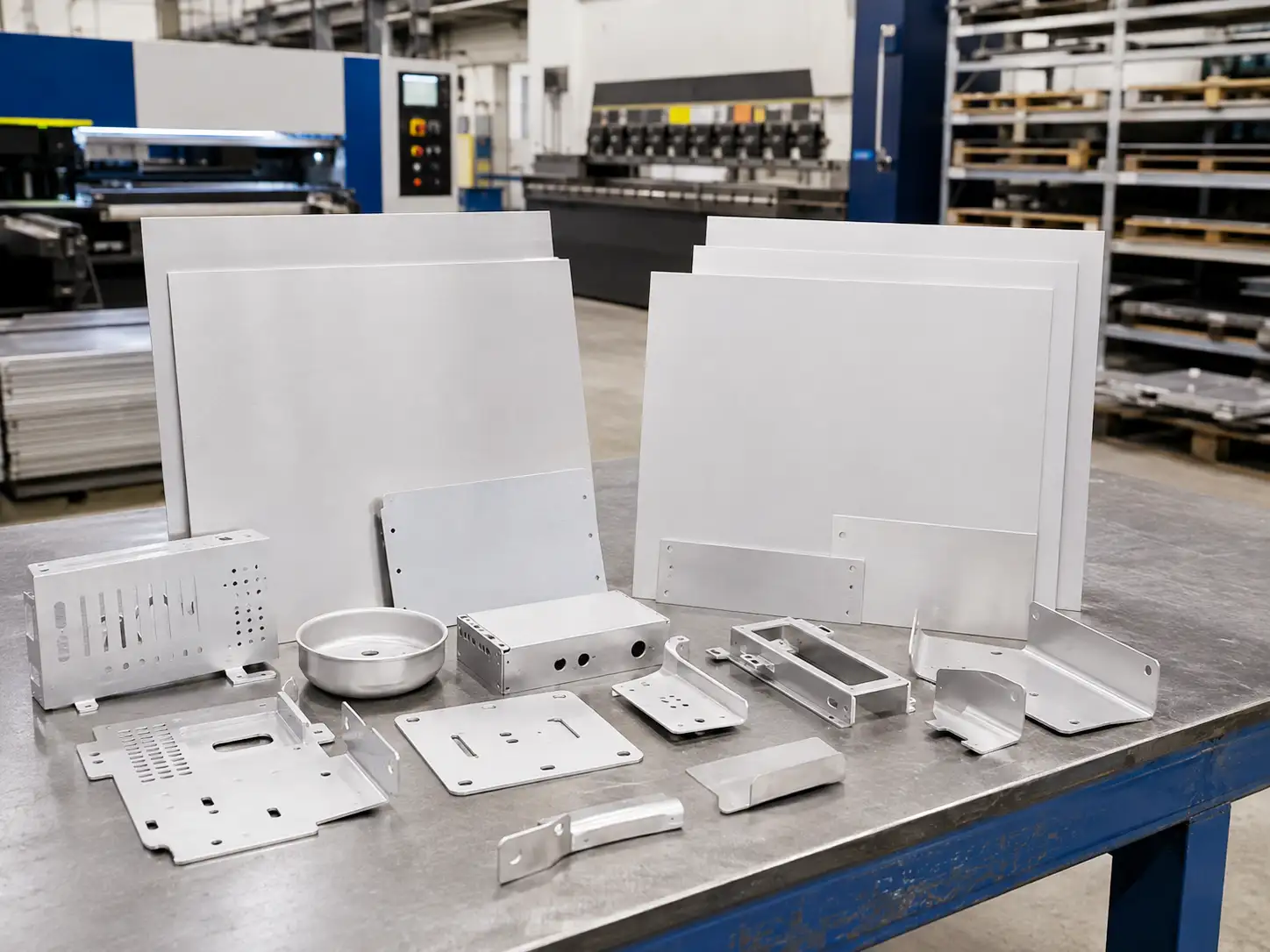
Was sind die wichtigsten Unterschiede zwischen AA 1060 und AA 1100?
Zusammenfassung der Kernunterschiede zwischen AA 1060 und AA 1100
| Vergleichsfaktor | AA 1060 | AA 1100 | Vorteil |
|---|---|---|---|
| Aluminiumreinheit | 99.6%+ | 99.0%+ | 1060 |
| Elektrische Leitfähigkeit | 60–62% IACS | 58–59% IACS | 1060 |
| Wärmeleitfähigkeit | 230–237 W/(m·K) | 218–222 W/(m·K) | 1060 |
| Korrosionsbeständigkeit | Ausgezeichnet | Ausgezeichnet | Gleich |
| Festigkeit (H-Zustand) | Slightly lower | Slightly higher | 1100 |
| Umformbarkeit | Gute | Ausgezeichnet | 1100 |
| Deep drawing / complex forming | Gute | Better | 1100 |
| Schweißbarkeit | Ausgezeichnet | Ausgezeichnet | Gleich |
| Material cost | Similar | Similar | — |
| Anodized appearance | Silver-gray | Gray-green | Depends on application |
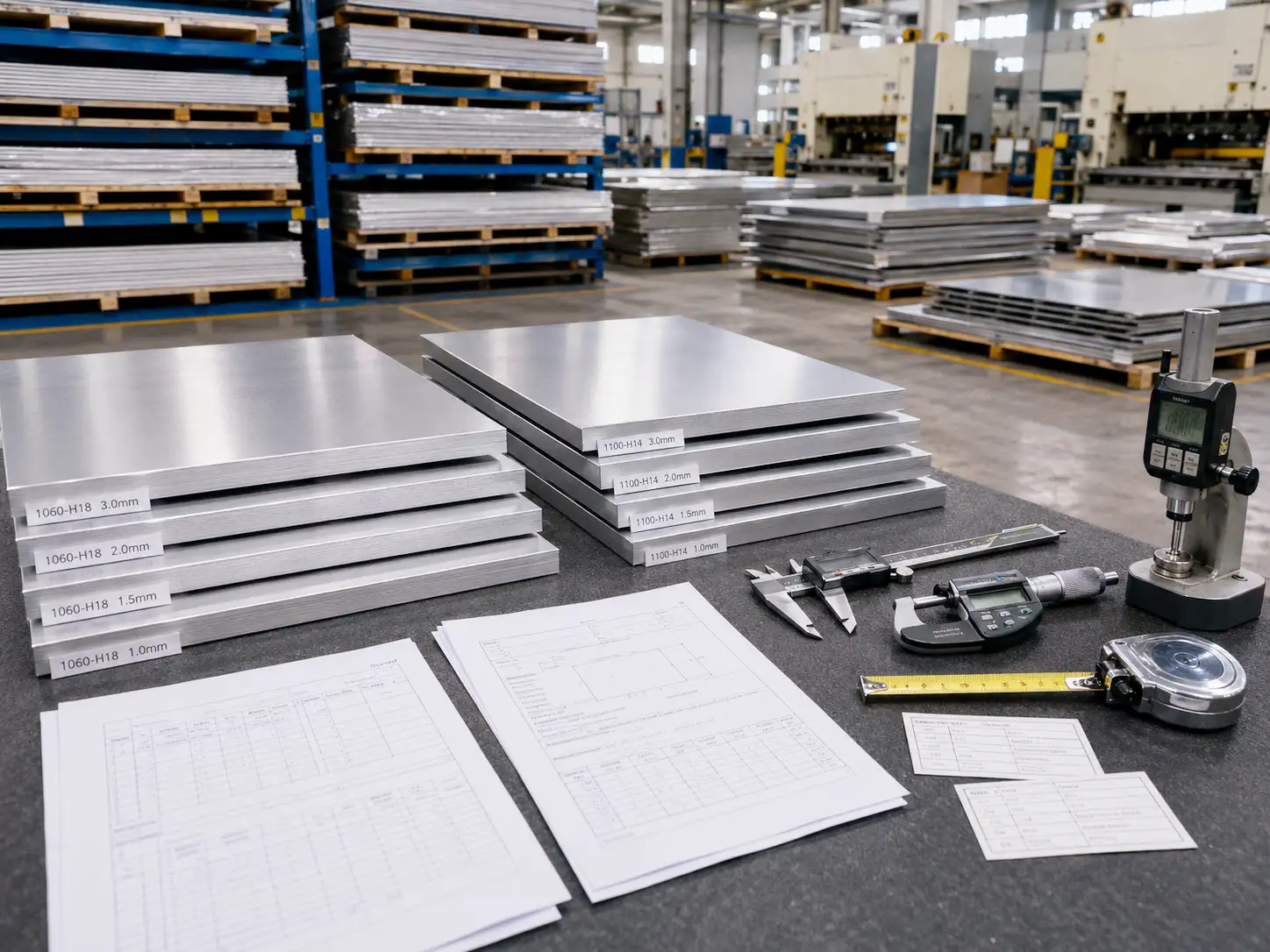
| Position | AA 1060 | AA 1100 | Hinweise |
|---|---|---|---|
| Series | 1xxx commercially pure aluminum | 1xxx commercially pure aluminum | Both belong to the pure aluminum family |
| Minimum aluminum content | 99.60% | 99.00% | 1060 is the higher-purity grade |
| Key compositional feature | Tighter impurity control | Contains a small amount of Cu | 1100 is a distinct grade, not a “lower-spec” version of 1060 |
| Common designations | AA1060 / Al99.6 / A91060 | AA1100 / Al99.0Cu / A91100 | Designations may vary by document, so always verify the standard and composition first |
| Heat-treatable strengthening | Nein | Nein | Properties are mainly adjusted through cold-work temper |
| Gängige Lieferformen | Commonly supplied as sheet, coil, and strip | Commonly supplied as sheet, coil, and strip | Exact forms still depend on the applicable product standard |
Chemical Composition Comparison: AA 1060 vs. AA 1100
| Element | AA 1060 (wt%) | AA 1100 (wt%) |
|---|---|---|
| Aluminium (Al) | ≥99.60% | ≥99.00% |
| Silizium (Si) | ≤0.25% | ≤0.95% (Si+Fe) |
| Eisen (Fe) | ≤0.35% | ≤0.95% (Si+Fe) |
| Kupfer (Cu) | ≤0,05% | 0.05%–0.20% |
| Manganese (Mn) | ≤0.03% | ≤0,05% |
| Magnesium (Mg) | ≤0.03% | ≤0,05% |
| Zink (Zn) | ≤0,05% | ≤0.10% |
| Titan (Ti) | ≤0.03% | ≤0.03% |
| Other impurities | ≤0.15% | ≤0.15% |
Physical and Mechanical Property Comparison: AA 1060 vs. AA 1100
| Eigenschaft | AA 1060 | AA 1100 |
|---|---|---|
| Dichte | 2,70 g/cm³ | 2.71 g/cm³ |
| Schmelzpunkt | 647–658°C | 640–655°C |
| Elektrische Leitfähigkeit | 60–62% IACS | 58–59% IACS |
| Wärmeleitfähigkeit | 230–237 W/(m·K) | 218–222 W/(m·K) |
| Tensile strength (O temper) | 60–95 MPa | 70–95 MPa |
| Yield strength (O temper) | 15–35 MPa | 25–35 MPa |
| Elongation (O temper) | 25–40% | 30–38% |
| Brinell hardness (O temper) | 20–30 HB | 22 HB |
Temper, Product Forms, and How to Interpret Performance
Commercially pure aluminum is not heat-treatable for strengthening. Its properties are mainly adjusted through cold work hardening and annealing. Temper designations are the professional terms used to describe the material’s current level of work hardening.
Typical Mechanical Properties by Temper
| Härtezustand | Tensile Strength (MPa) | Yield Strength (MPa) | Elongation (%) | Typische Anwendungen |
|---|---|---|---|---|
| O | 60–95 | 15–35 | 25–40 | Deep drawing, spinning, complex bending |
| H12 | 75–110 | 50–70 | 10–15 | General forming, light load-bearing applications |
| H14 | 85–120 | 65–95 | 8–12 | Medium-strength parts, simple forming |
| H18 | 125–150 | 100–130 | 4–8 | High-strength sheet, simple shapes |
Note: If you are not sure which temper to choose, it is best to consult your supplier. They can usually recommend the most suitable specification based on your application.
Gängige Produktformen
- Sheet / thin sheet: Thickness ranges from 0.1 mm to several millimeters, with standard sizes such as 1220 × 2440 mm and 1500 × 3000 mm.
- Coil / strip: Continuous coil form, suitable for high-volume stamping operations.
- Circles / discs: Commonly used for lighting reflectors, cookware, and similar products.
- Tube / bar: Available in a variety of forms, including round tube, square tube, and round bar.
- Tread plate: Surface embossed with anti-slip patterns, commonly used for steps, platforms, and flooring.
Processing Suitability of AA 1060 / AA 1100
From our perspective at SR MFG, 1060 and 1100 are widely used in sheet metal fabrication not because they are universal materials, but because they already offer a strong foundation for processing.
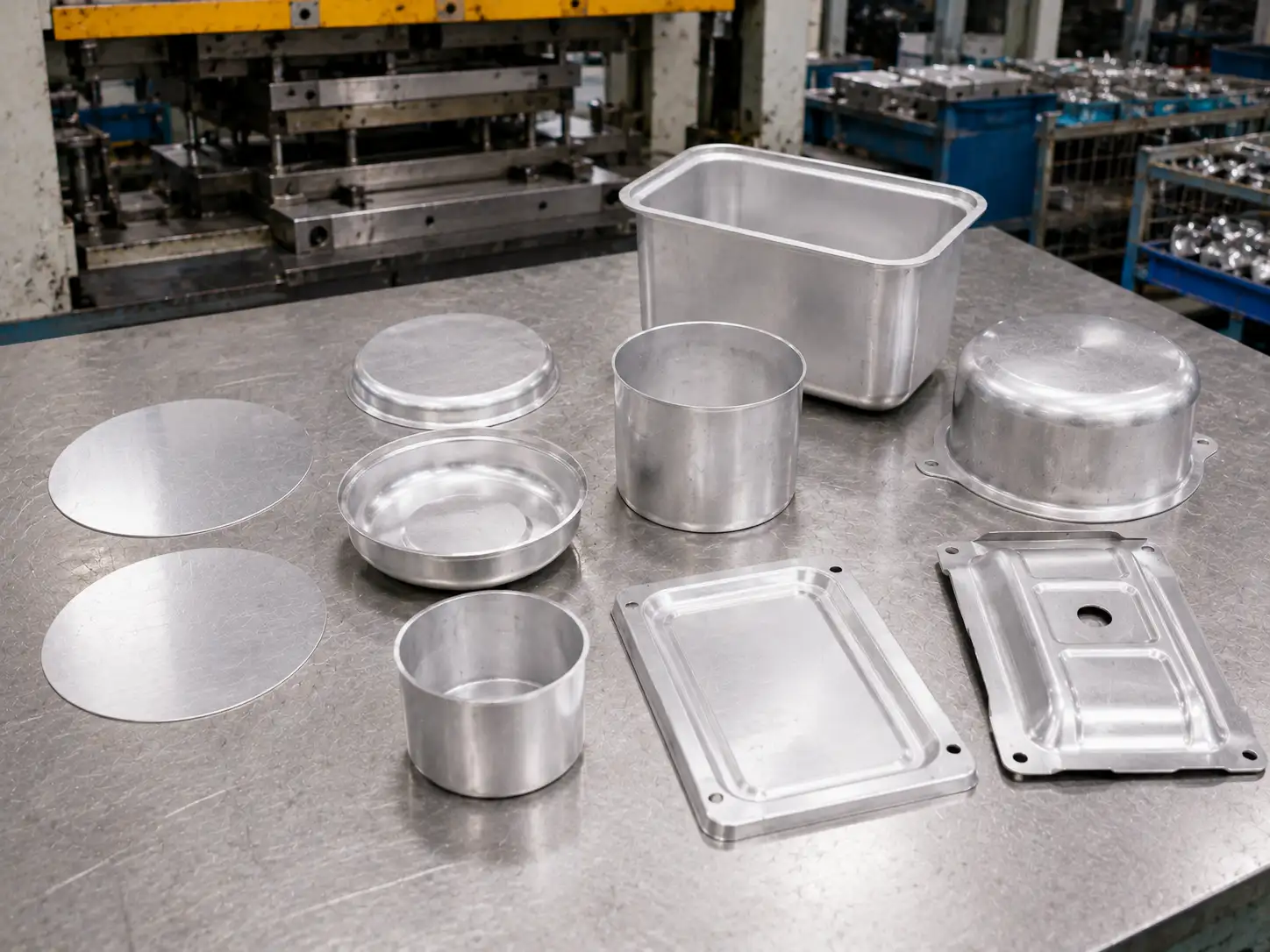
Stamping and deep drawing
In the O temper, both 1060 and 1100 can achieve good deep-drawing performance. Because 1100 offers higher ductility, it tends to perform more consistently in parts with greater draw depth or more complex shapes. 1060 is better suited to medium-depth stamped parts and applications where material purity is a more important consideration.
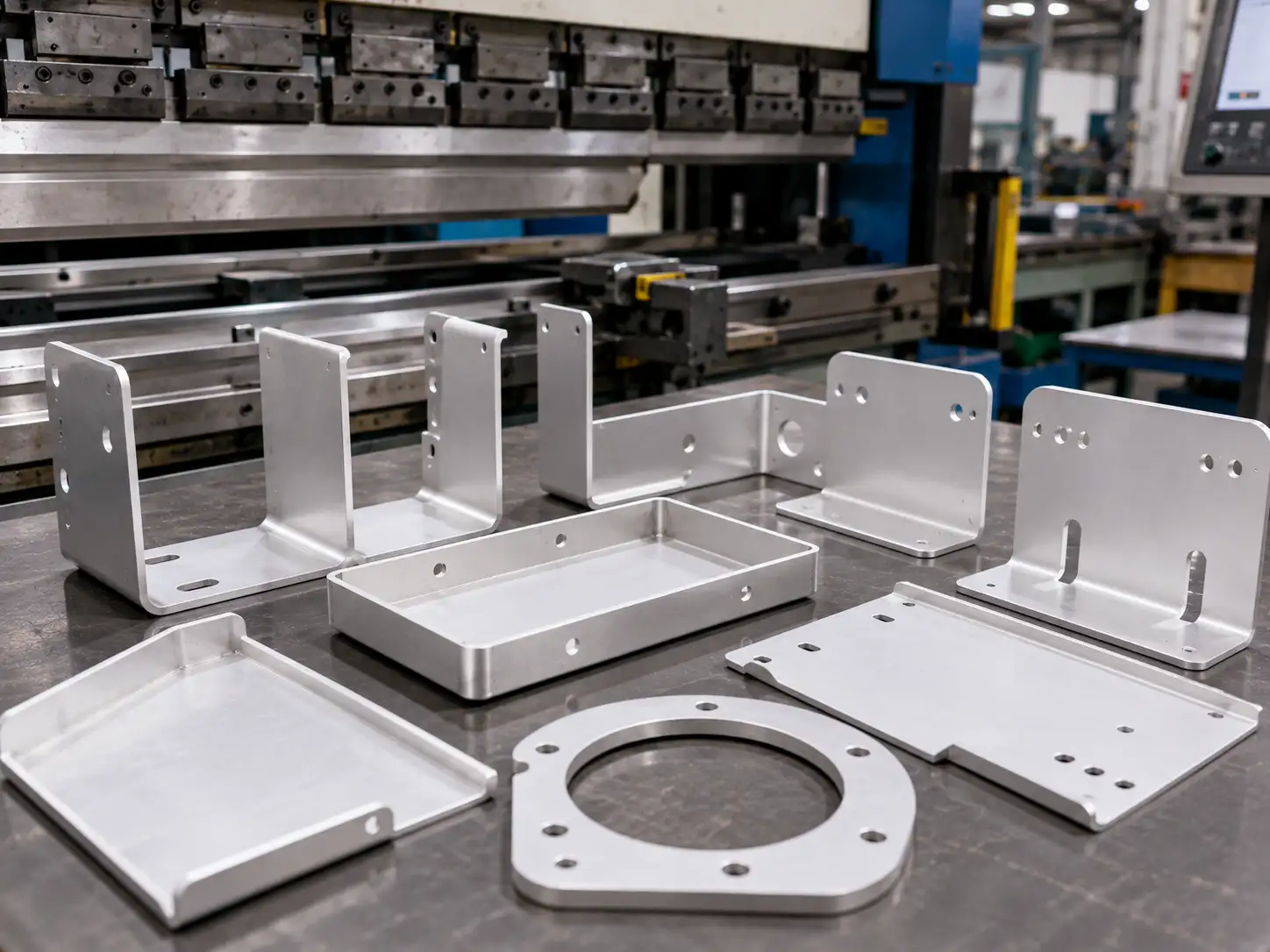
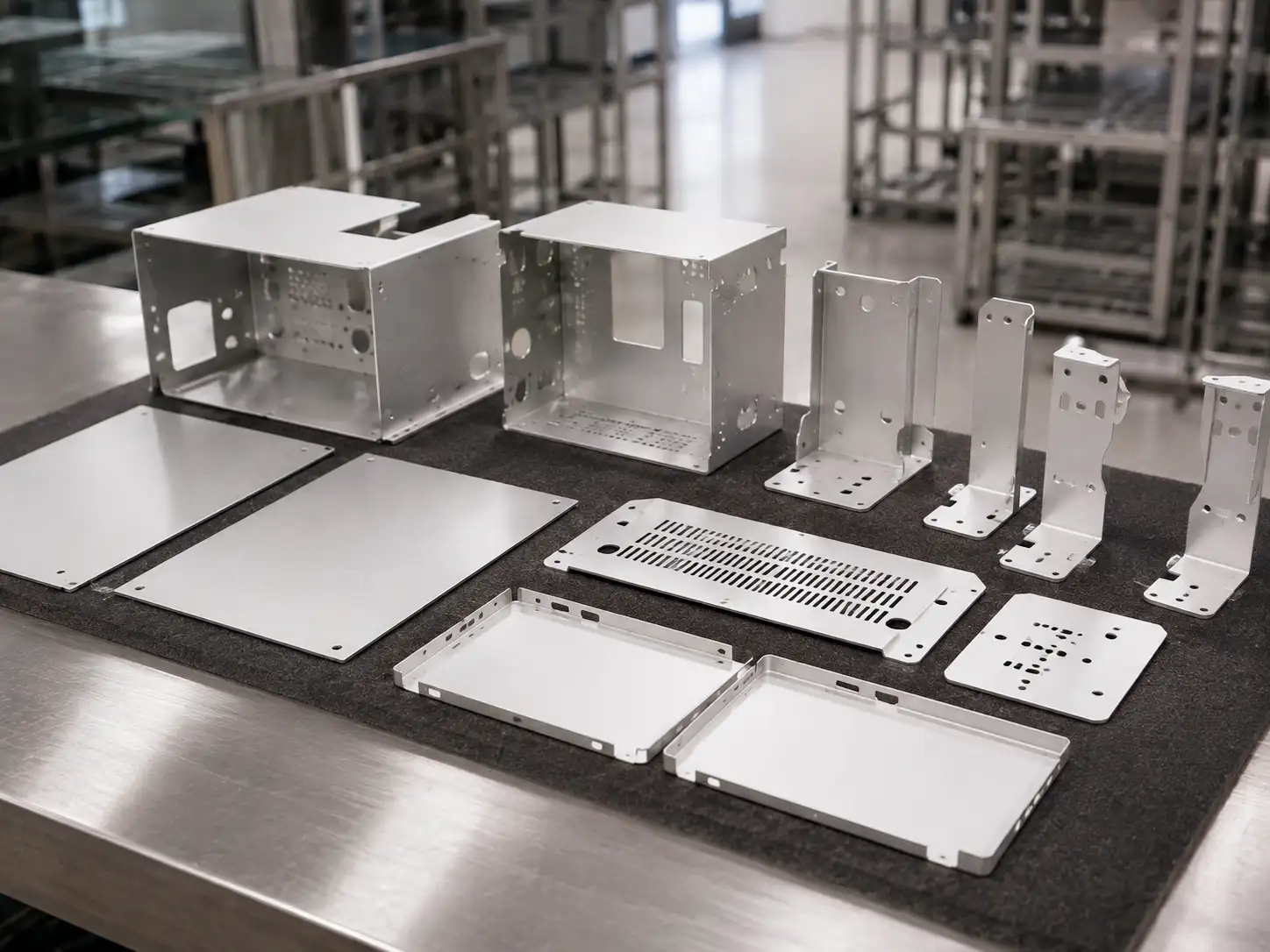
Bending and flanging
Annealed aluminum has excellent bending performance, and the minimum bend radius can be as low as 0.5 to 1 times the material thickness. As hardness increases, such as in H14 or H18 tempers, the bend radius should be increased accordingly to avoid surface cracking.
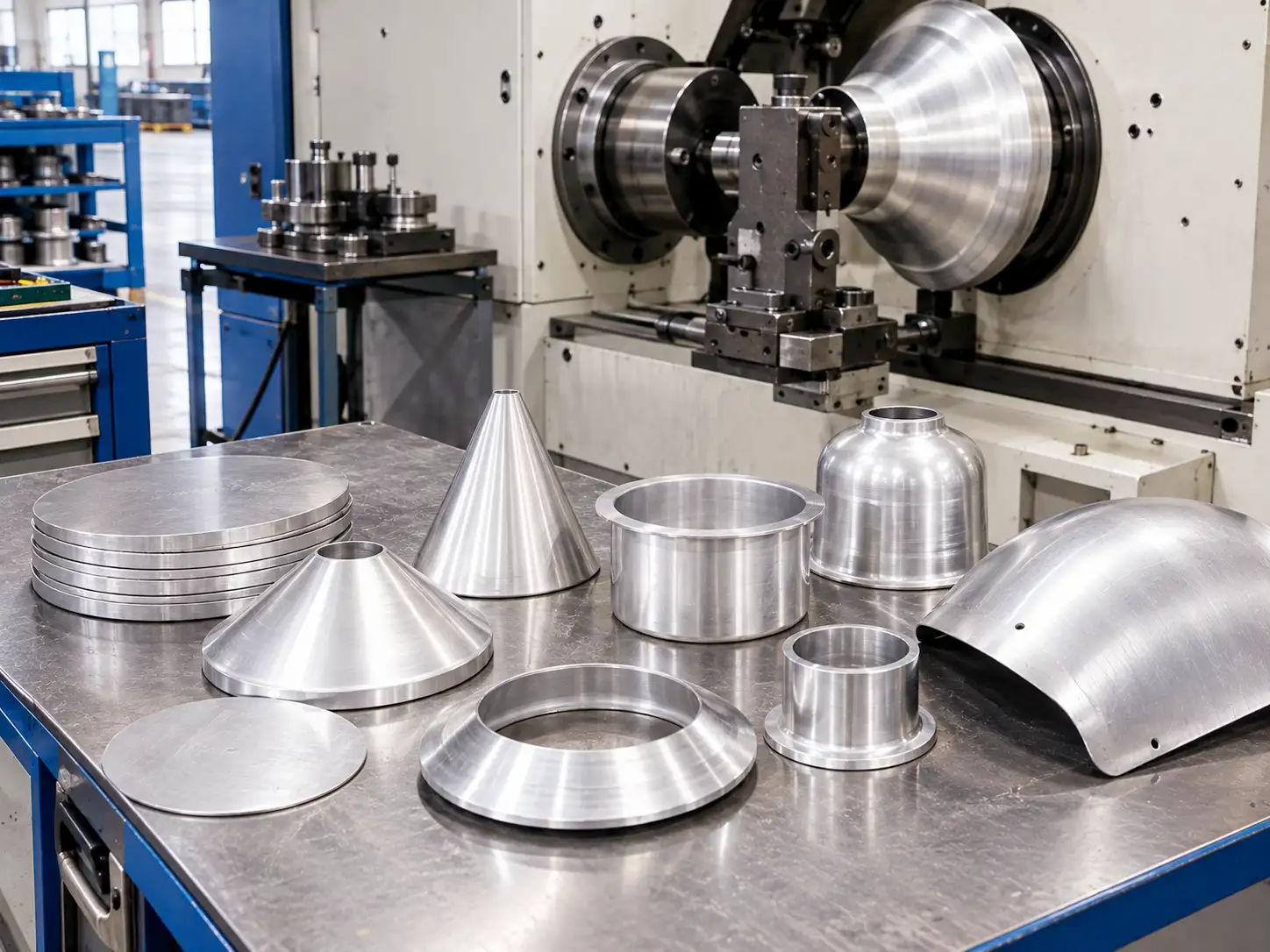
Spinning
This is one of the strengths of pure aluminum. Whether the part is a lampshade, a container, or a specially shaped component, both materials can perform well. However, 1100 generally offers a higher success rate when spinning more complex shapes.
Eloxieren
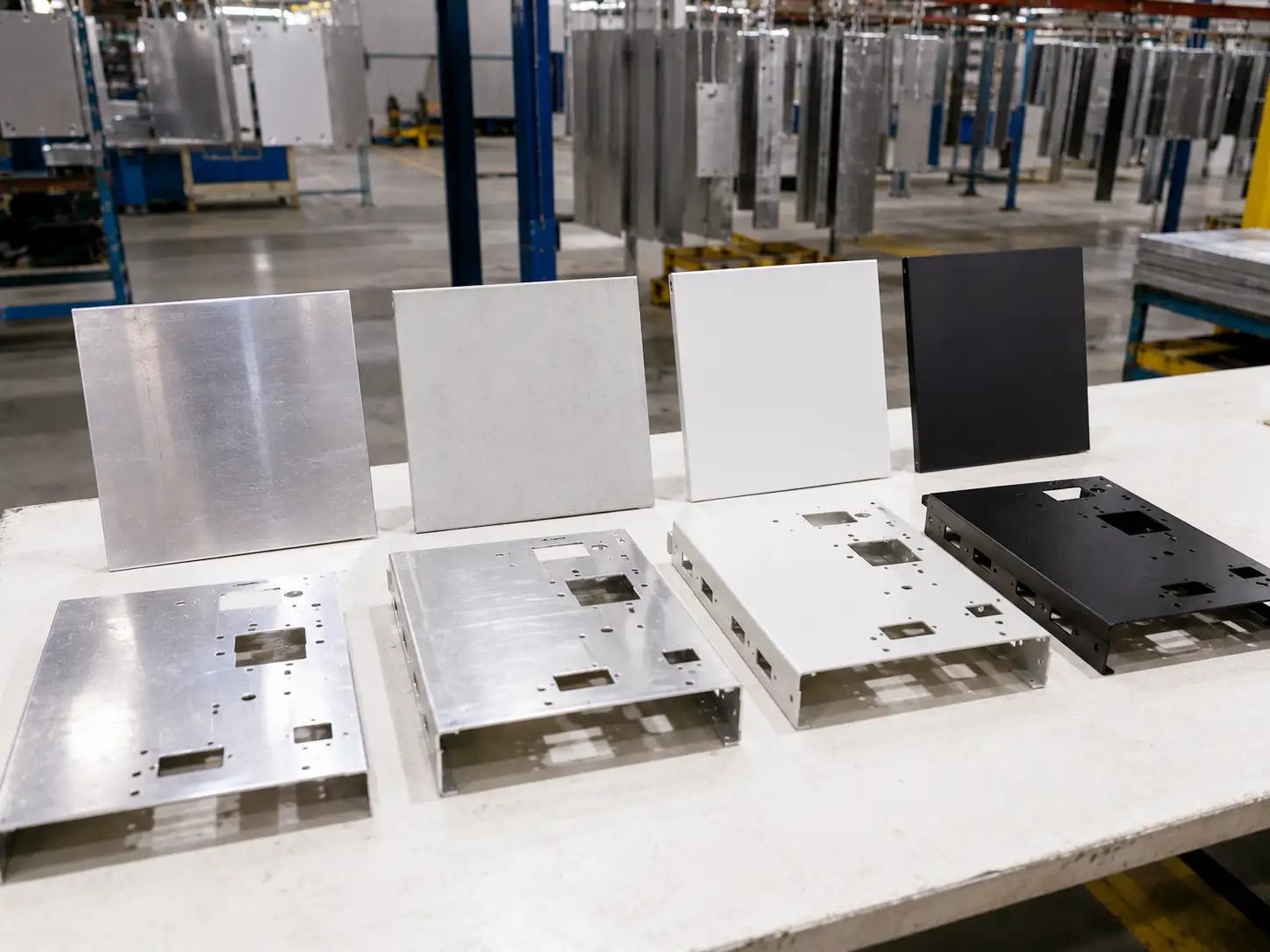
Both materials are well suited to anodizing and can develop an attractive, corrosion-resistant oxide film. After anodizing, 1060 typically shows a silver-gray appearance, while 1100 may develop a slight gray-green tint. For decorative parts that require dyeing, it is advisable to work with a specialized anodizing service provider to achieve more uniform color results.
Powder coating and painting
Pure aluminum performs well with both powder coating and liquid coating systems. Before coating, appropriate surface pretreatment—such as chemical conversion treatment—is usually recommended to improve coating adhesion.
If your project places greater emphasis on functional requirements such as high purity, electrical conductivity, thermal conductivity, or reflectivity, then AA 1060 is often one of the better choices.
If you need broader general-purpose usability and more mature commercial availability, then AA 1100 is well worth considering.
The table below is designed to help with practical material selection:
| Application Area | Recommended Grade | Recommended Temper | Reason for Selection |
|---|---|---|---|
| Electrical busbars / conductors | 1060 | O / H12 | Highest electrical conductivity and lower resistive loss |
| Heat sinks / heat exchangers | 1060 | O / H12 | Excellent thermal conductivity |
| Capacitors / electronic components | 1060 | O | Higher material purity |
| Curtain walls / decorative panels | 1100 | H14 / H24 | Good formability with moderate strength |
| Signage / nameplates | 1100 | H14 / H18 | Easy to process and strong enough for the application |
| Lighting reflectors | 1100 | O / H12 | Good spinning performance |
| Deep-drawn parts / cookware | 1100 | O | Best ductility |
| Aluminum foil / packaging materials | 1060 | O | High purity and easier compliance with safety requirements |
| Chemical containers / piping | 1060 / 1100 | H112 / O | Gute Korrosionsbeständigkeit |
What Should Be Confirmed When Purchasing AA 1060 / AA 1100?
Once you have selected AA 1060 or AA 1100 for your project and are ready to purchase, the following details should be clearly defined.
Procurement Specification Checklist
| Item to Confirm | Example | Wichtigkeit |
|---|---|---|
| Alloy grade | AA 1060 | ★★★ |
| Härtezustand | O / H14 | ★★★ |
| Dicke | 2,0 mm | ★★★ |
| Width | 1000 mm | ★★★ |
| Length | 2000 mm (except for coil) | ★★★ |
| Tolerance requirement | ±0,05 mm | ★★ |
| Product form | Sheet / coil / circle | ★★★ |
| Oberflächenzustand | Mill finish / bright finish | ★★ |
| Anwendbare Norm | ASTM B209 | ★★ |
| Certification requirement | MTR / SGS report | ★ |
| Packaging method | Wooden pallet / simple packaging | ★ |
| Menge | 500 kg | ★★★ |
| Durchlaufzeit | Within 15 days | ★★★ |
AA 1060 / AA 1100 Material Selection Advice: When to Choose Pure Aluminum, and When Not To
By this point, you likely already have a general understanding of 1060 and 1100. Even after reading all the earlier sections, it is completely normal to still feel unsure about when pure aluminum is the right choice and when another aluminum alloy would be more suitable. To make that easier, we have provided a simplified selection guide below for reference. If you still have questions, the engineers at SR MFG can help you evaluate your project in more detail.
Simplified Material Selection Logic
