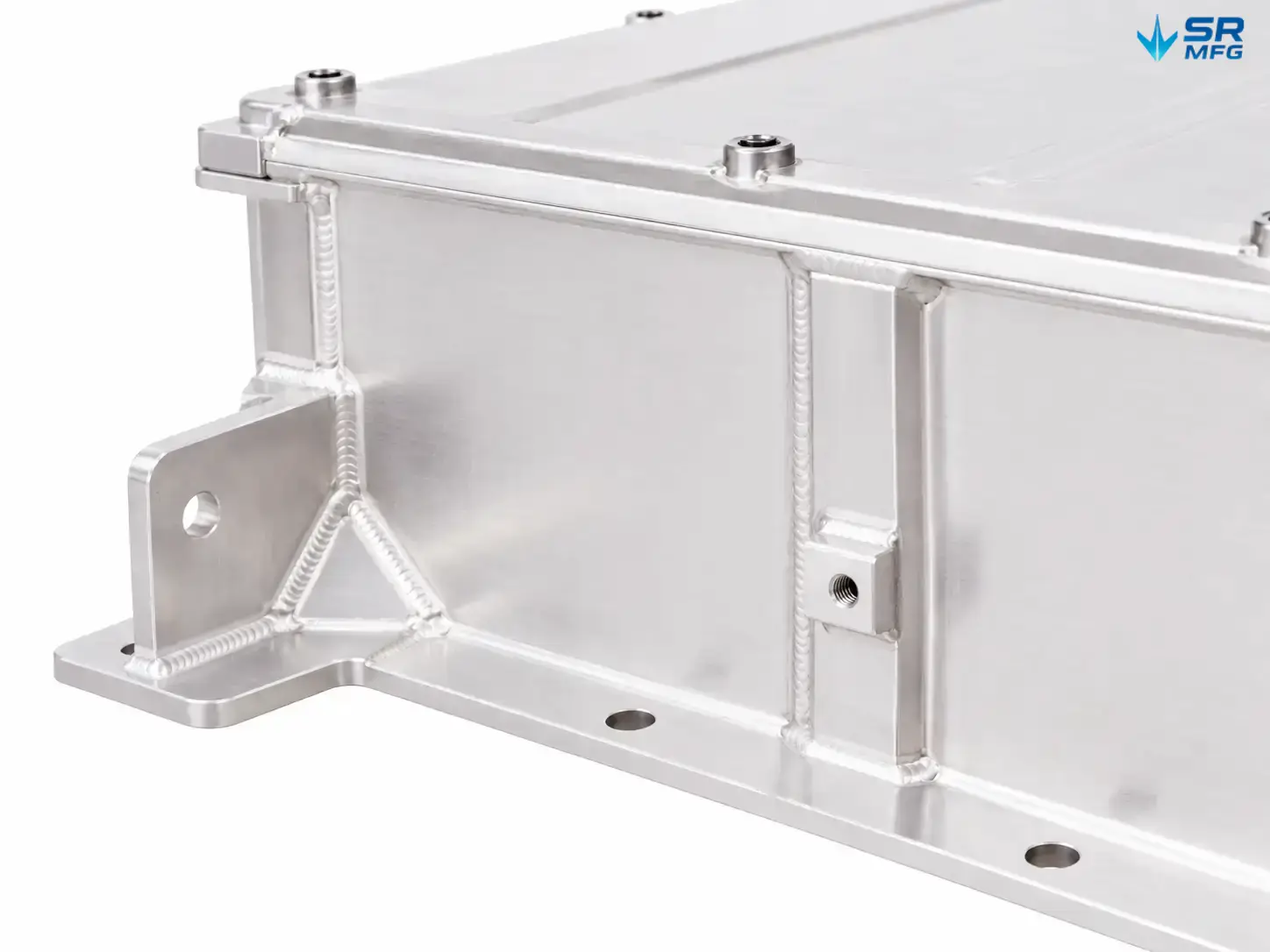
Seitenwände für EV-Batteriegehäuse
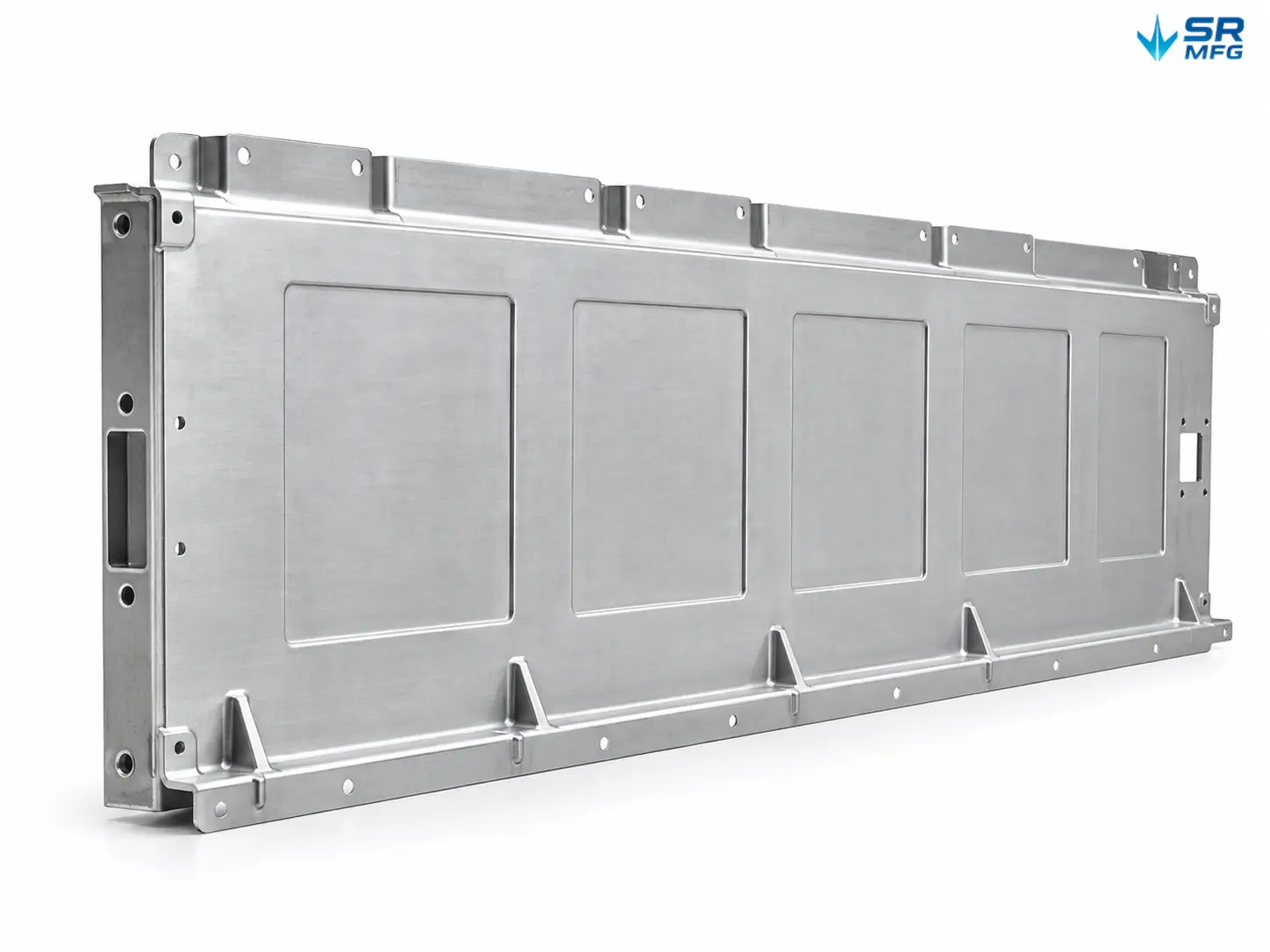
Präzisionsgefertigte Seitenwände für Batteriegehäuse von Elektrofahrzeugen.
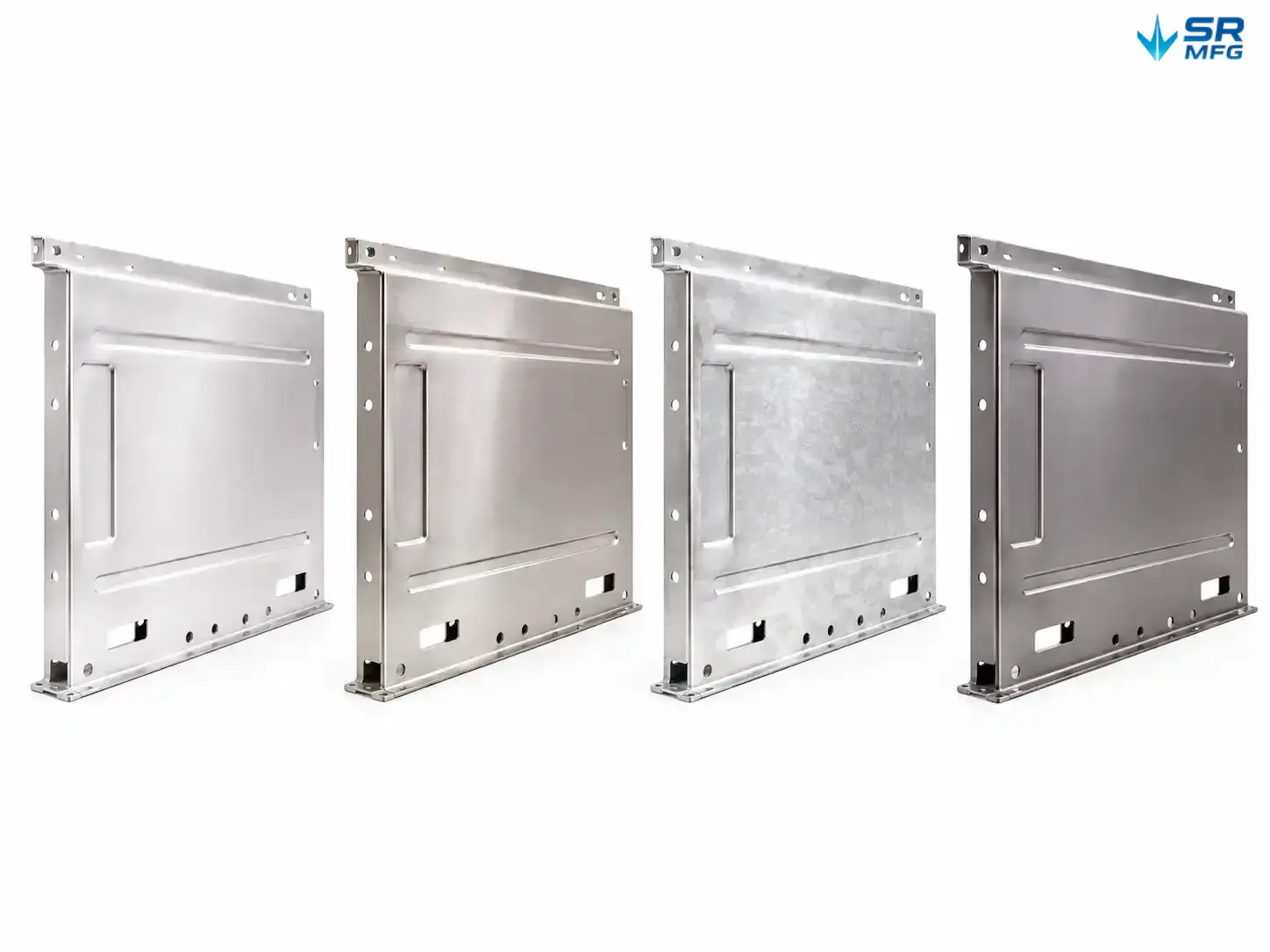
- Individuelle Materialien: Aluminium, Edelstahl, verzinkter Stahl und kaltgewalzter Stahl
- Flexible Größen: Plattenlängen bis zu 2.000 mm bei Dicken von 0,8 bis 4,0 mm
- Qualitätssicherung: ISO 9001-zertifiziertes Fertigungssystem mit Prozessen gemäß IATF 16949 Automobilqualitätsanforderungen
- Kostenlose DFM-Prüfung: Reichen Sie Ihre Zeichnungen vor der Produktion für eine Fertigbarkeitsbewertung ein
- Komplettfertigung aus einer Hand: Vollständige Prozessrückverfolgbarkeit vom Laserschneiden bis zur Endmontage
Fordern Sie noch heute ein kostenloses Angebot an — laden Sie Ihre Zeichnungen hoch und erhalten Sie ein detailliertes Angebot innerhalb von 24 Stunden.
Produkt Details
| Spezifikation | Details |
|---|---|
| Plattenlängenbereich | Individuell, typischerweise 800–2.000 mm; größere Größen können je nach Projektanforderungen bewertet werden |
| Blechdicke | 0,8–4,0 mm, je nach Material und Anwendung |
| Maßtoleranz | ±0,1 mm bei kritischen Abmessungen; engere Toleranzen auf Anfrage erhältlich |
| Materialoptionen | Aluminiumlegierungen (5xxx/6xxx-Serie), Edelstahl (304/316), verzinkter Stahl, kaltgewalzter Stahl |
| Schweißverfahren | Laserschweißen, WIG-Schweißen, MIG-Schweißen, Rührreibschweißen (FSW) |
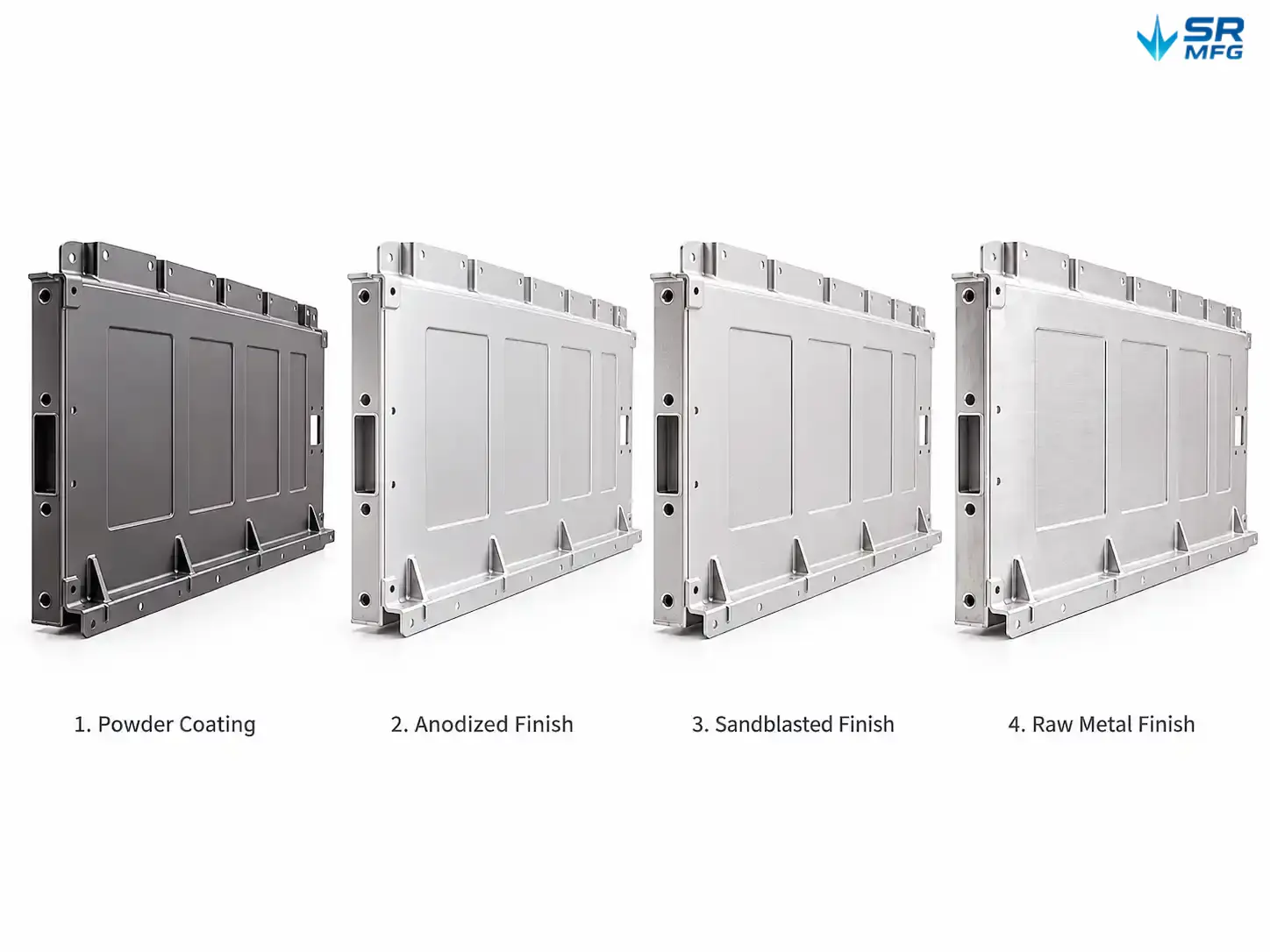
| Oberflächenbehandlungen | Pulverbeschichtung, Eloxieren, Sandstrahlen, PVDF-Beschichtung, Walzblank |
| Schutzart | IP65, IP66, IP67, IP68, IP69K, je nach Dichtungsdesign und Fertigungsprozess |
| Qualitätszertifizierungen | ISO 9001, IATF 16949 Automobil-Qualitätsmanagementanforderungen |
| Prototypen-Vorlaufzeit | 7–10 Werktage, je nach Produktkomplexität |
| Produktions-Vorlaufzeit | 15–25 Werktage, je nach Menge und Produktkomplexität |
| Mindestbestellmenge | Ab 1 Stück für Prototypen; Produktionsbestellungen beginnen typischerweise bei 100 Stück |
| Akzeptierte Dateiformate | STEP, IGES, DXF, DWG, PDF-Zeichnungen |
Präzisionsgefertigte Seitenwände für EV-Batterieboxen
Seitenwände von EV-Batterieboxen bilden die strukturellen Seitenwände eines Batteriepackgehäuses. Zusammen mit der Bodenplatte, der oberen Abdeckung und den Stirnwänden bilden sie ein versiegeltes Gehäuse, das die Batteriemodule und das Batteriemanagementsystem schützt.
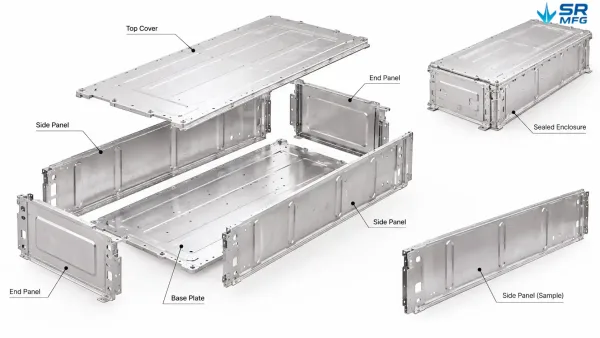
Dieses Bild zeigt die Position der Seitenwände innerhalb eines kompletten EV-Batteriegehäuses.
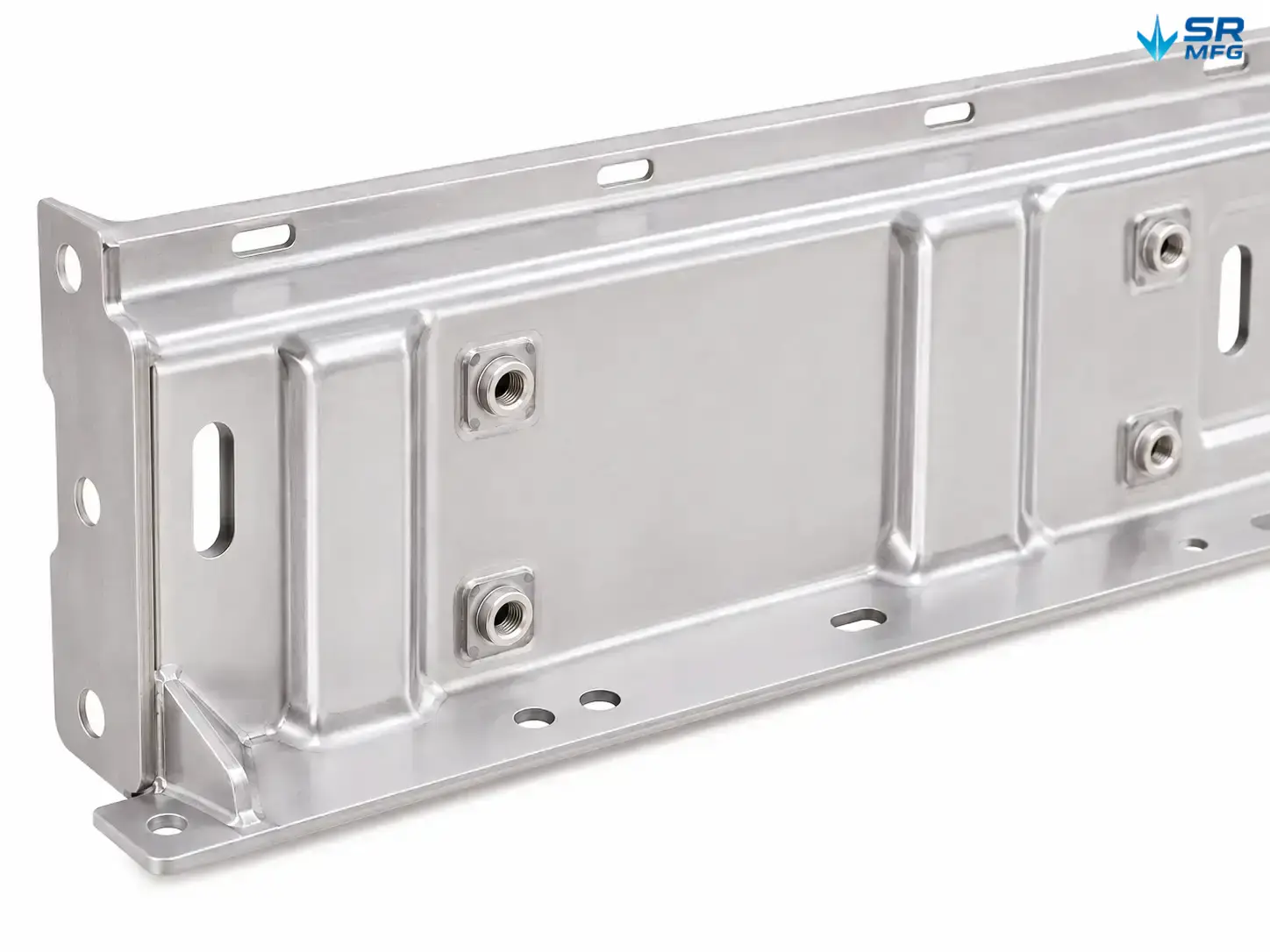
Diese Wände müssen anspruchsvolle Anforderungen erfüllen. Sie benötigen ausreichende strukturelle Integrität, um Modullasten zu tragen, eng kontrollierte Abmessungen für eine zuverlässige Abdichtung und gleichbleibende Oberflächenqualität zur Vermeidung von Verunreinigungen.
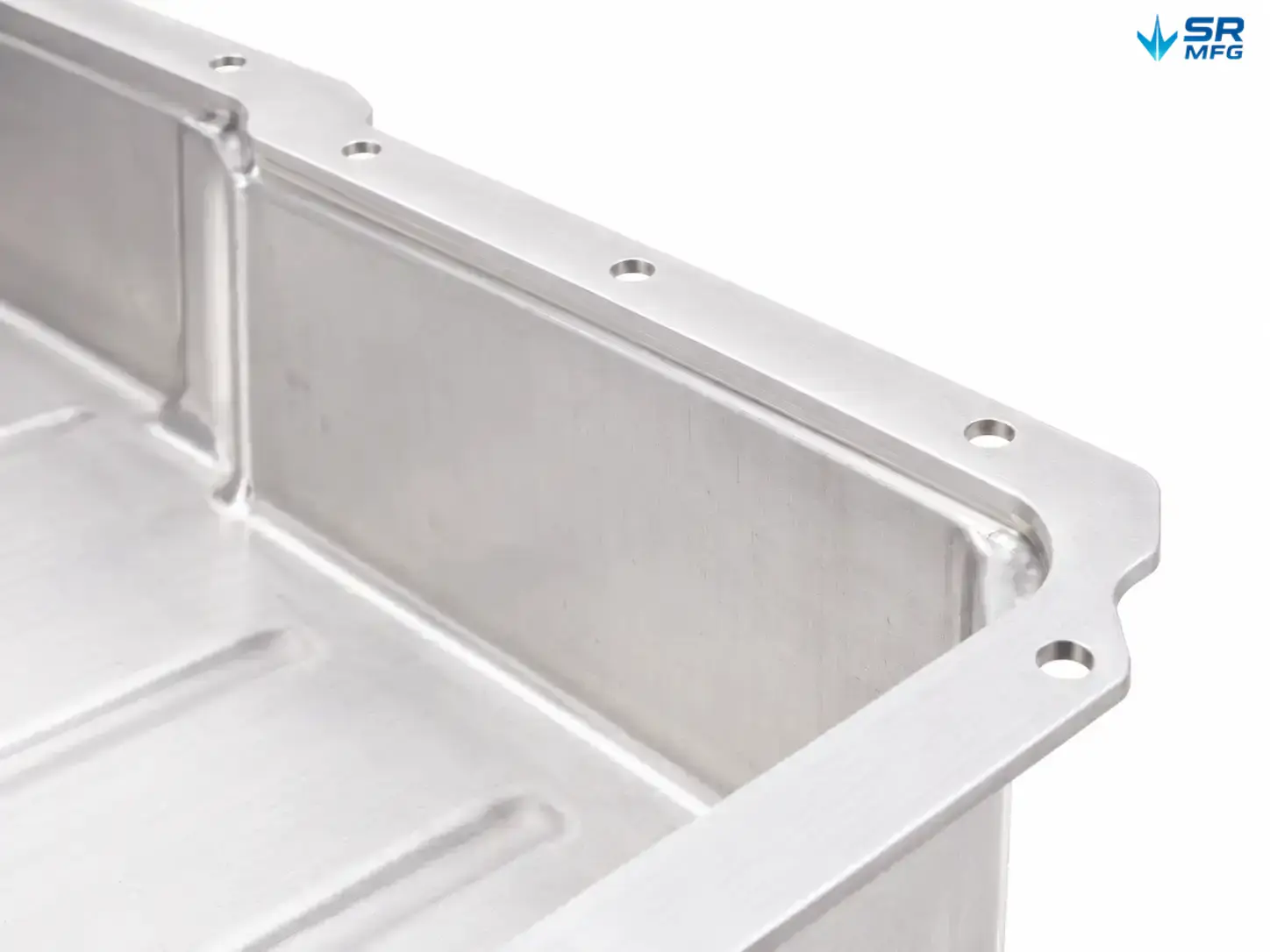
In Elektrofahrzeuganwendungen erfüllen Seitenwände oft mehrere Funktionen gleichzeitig. Sie können als Strukturkomponenten im Crash-Lastpfad dienen, IP-zertifizierten Schutz gegen Spritzwasser und Wassereintritt bieten und möglicherweise auch zur elektromagnetischen Abschirmung beitragen.
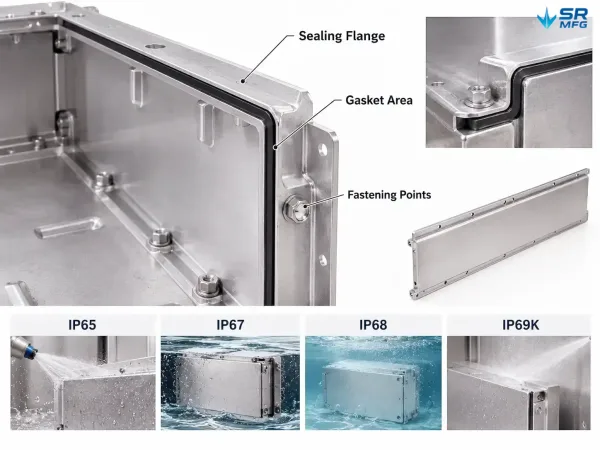
Dieses Bild erläutert Dichtungsmerkmale und typische IP-Schutzgrade für das Seitenwanddesign.
Wir fertigen jede Seitenwand als Präzisionskomponente.
Bevor das erste Teil geschnitten wird, führen wir eine Maßtoleranzanalyse durch, um kritische Merkmale, Dichtflächen und strukturelle Befestigungspunkte zu identifizieren. Fertigungsprozesse, Prüfhäufigkeit und Betriebsstandards werden dann um diese Anforderungen herum definiert.
So wählen Sie das richtige Material für Batteriebox-Seitenwände
Das für eine EV-Batteriebox-Seitenwand gewählte Material beeinflusst direkt Gewicht, Korrosionsbeständigkeit, strukturelle Festigkeit und Kosten. Jede Option hat ihre eigenen Vorteile und Kompromisse.
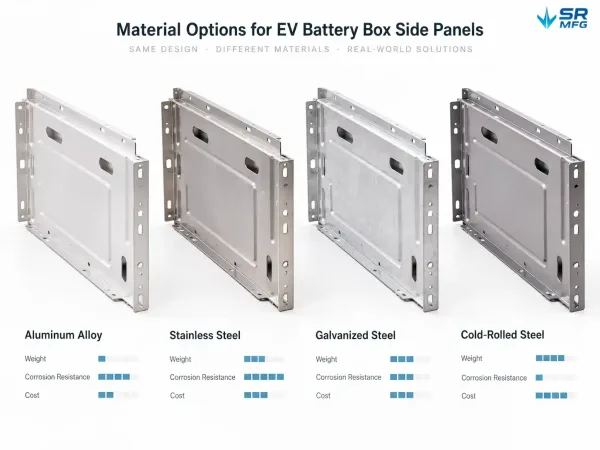
Dieses Bild vergleicht die wichtigsten Materialoptionen für EV-Batteriebox-Seitenwände.
| Material | Vorteile | Am besten geeignete Anwendungen | Überlegungen |
|---|---|---|---|
| Aluminiumlegierung (5xxx/6xxx-Serie) | 40–50% leichter als Stahl, ausgezeichnete Korrosionsbeständigkeit, vollständig recycelbar | Personenkraftwagen-EVs, Nutzfahrzeug-EVs und Anwendungen, bei denen Gewichtsreduzierung die Reichweite verbessert | Höhere Materialkosten und erfordert spezialisierte Schweißverfahren wie FSW und Laserschweißen |
| Edelstahl (304/316) | Excellent corrosion resistance, high strength, and good durability | Marine applications, offshore systems, and chemical environments | Heavier than aluminum, higher material cost, and requires specialized welding processes |
| Verzinkter Stahl | Good corrosion protection at a relatively low cost, with strong structural performance | Outdoor energy storage, industrial applications, and cost-sensitive projects | Heavier than aluminum, and the zinc coating may be affected during welding |
| Cold-Rolled Steel | Lowest material cost, excellent formability, and good surface quality | Indoor applications, telecommunications equipment, and controlled environments | Requires surface treatment for improved corrosion resistance and is heavier than other material options |
Material Selection Recommendations:
For most EV applications, aluminum alloys provide a strong balance between weight reduction and overall performance.
For energy storage systems where cost is a primary consideration, galvanized steel provides good protection at a lower material cost.
Marine applications typically require stainless steel for long-term corrosion resistance.
Anwendungen
Battery Enclosure Solutions for Multiple Industries
Our side panels can be manufactured for a wide range of applications, each with its own technical requirements.
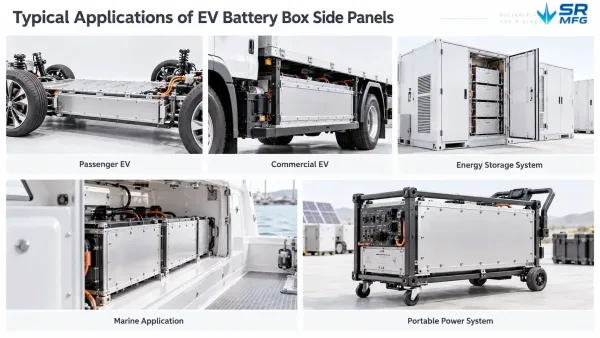
EV battery box side panel applications for electric vehicles energy storage marine and portable power systems
Passenger Electric Vehicles
- Typical Requirements: Lightweight construction, IP67 sealing, crash protection, EMI shielding
- Our Solution: Aluminum alloy panels, precision welding, and integrated mounting features
- Key Consideration: Weight reduction has a direct impact on vehicle range — a 10% reduction in weight can improve driving range by approximately 5–8%
Commercial Electric Vehicles
- Typical Requirements: High structural strength, durability, and serviceability
- Our Solution: Thicker materials, reinforced mounting points, and service-friendly access features
- Key Consideration: Commercial vehicles typically require easier access for battery maintenance and servicing
Energy Storage Systems
- Typical Requirements: Large-format panels, outdoor corrosion resistance, modular installation
- Our Solution: Galvanized steel or powder-coated steel panels combined with weather-resistant sealing designs
- Key Consideration: ESS panels often exceed 1,000 mm in length and must withstand long-term outdoor exposure
Marine Applications
- Typical Requirements: Salt-spray resistance, vibration resistance, and long-term sealing performance
- Our Solution: Stainless steel or marine-grade aluminum combined with enhanced surface protection
- Key Consideration: Marine environments commonly require more than 500 hours of salt-spray corrosion resistance
Portable Power Systems
- Typical Requirements: Lightweight construction, impact resistance, and compact integration
- Our Solution: Thin-wall aluminum panels with integrated handles, latches, and cable interfaces
- Key Consideration: Weight and available installation space are the primary design constraints
Why Choose Our Battery Enclosure Solutions
Battery Enclosure Manufacturing Expertise — We focus on metal structural components for battery enclosures rather than general-purpose sheet metal fabrication alone. Our engineers understand sealing interfaces, crash-load paths, thermal management integration, and battery module mounting requirements, allowing us to better understand the technical needs of battery pack design engineers.
Single-Source Manufacturing — All processes, from cutting through packaging, are completed within one manufacturing facility. This eliminates unnecessary transfers between multiple suppliers and helps reduce tolerance stack-up caused by multi-vendor production.
Free DFM Review Before Quotation — Every drawing receives a complimentary design-for-manufacturability review. We identify potential production risks in advance, recommend opportunities to reduce cost and weight, and provide material selection guidance before you commit your project budget.
Quality Built Into the Manufacturing Process — Our four-stage quality control process covers the entire production cycle. Critical dimensions are verified using CMM inspection, sealing surfaces are checked for surface roughness, welds undergo leak testing, and full material traceability is maintained from incoming raw material through finished side panels.
Consistent Quality From Prototype to Production — We manufacture prototypes using processes designed for future production. The quality you validate during product development is the same standard carried into volume manufacturing.
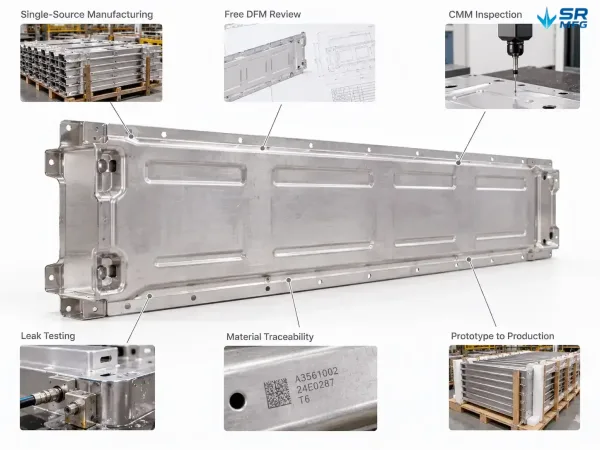
Manufacturing and quality control overview for EV battery box side panels
Our Custom Manufacturing Process
- Submit Your Requirements — Send us your 3D CAD files in STEP or IGES format together with 2D drawings specifying material requirements, tolerances, and order quantities.
- Free DFM Analysis — Our engineering team reviews your design for manufacturability, identifies potential production issues, and provides optimization recommendations within 24 hours.
- Quotation and Confirmation — We provide a detailed quotation covering material costs, processing time, and logistics expenses. Pricing is based on your specific project requirements.
- Prototype Production — Prototypes are manufactured using production-oriented processes for validation, helping ensure that the approved sample remains consistent with future production parts.
- Volume Production and Delivery — Once the sample is approved, volume production begins under strict quality control procedures. Products are packed for export and shipped according to your required delivery schedule.
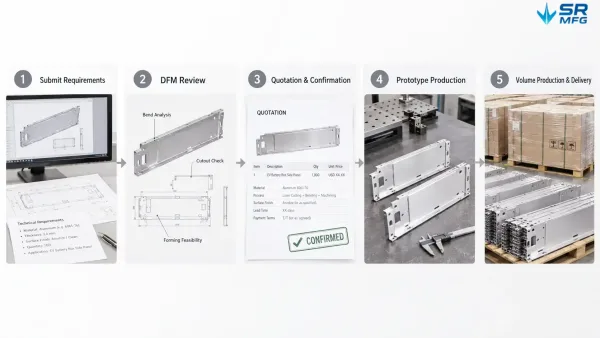
This image shows the step-by-step custom manufacturing process for EV battery box side panels.