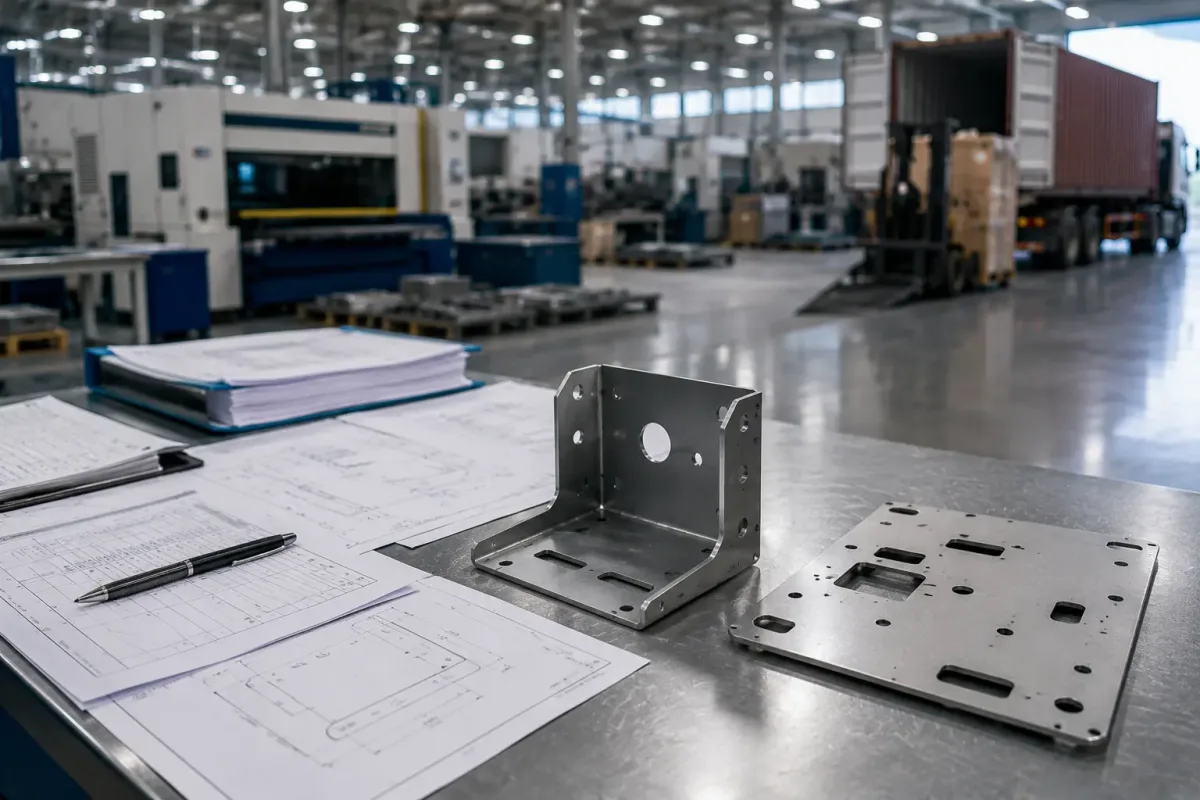
Schnellumsatz
Blechprototyping-Dienstleistungen
Vom Konzept zum funktionsfähigen Prototyp in Tagen, nicht Wochen.
Geringe Mindestbestellmenge. DFM-Unterstützung. Produktionsqualität, auf die Sie sich verlassen können.
Prototypen-Vorlaufzeit
Geringe Mindestbestellmenge
Enge Toleranzen
Erfahrenes Engineering
Was ist Schnellumsatz-Blechprototyping?
Schnellumsatz-Blechprototyping ist ein Produktentwicklungsansatz, bei dem Sie einen optimierten, durchgängigen Blechfertigungsprozess nutzen, um mehrere Prototyp-Iterationen in kurzer Zeit für Tests und Bewertung herzustellen.
Für Projekte, bei denen Ebenheit, Ausrichtung/Passung (z. B. Ebenheit und Parallelität) und kosmetisches Erscheinungsbild wichtig sind, sind Schnellumsatz-Prototypen besonders nützlich für die Validierung und Entscheidungsfindung in der Frühphase.
In vielen Fällen können Blechprototypen in wenigen Tagen, geliefert werden, abhängig von Materialverfügbarkeit, Designkomplexität und ob eine Oberflächenbehandlung erforderlich ist; Schnellumsatz-Dienstleistungen bieten üblicherweise Angebote von 2–5 Tagen für beschleunigte Prototypen, und einige Projekte können sogar noch schneller sein.
Im Vergleich zu Hochvolumenprozessen wie Stanzen vermeidet schnelles Blechprototyping oft komplexe, teure Hartwerkzeuge, was die Vorabinvestition überschaubarer hält und die parallele Iteration erheblich erleichtert.
Allerdings ist, ein einzelner Prototyp nicht unbedingt günstiger pro Einheit als Serienteile. Mit steigenden Stückzahlen sinken die Stückkosten in der Regel, weil Fixkosten auf mehr Einheiten verteilt werden und die Fertigung effizienter wird—einer der klassischen “Skaleneffekte”.
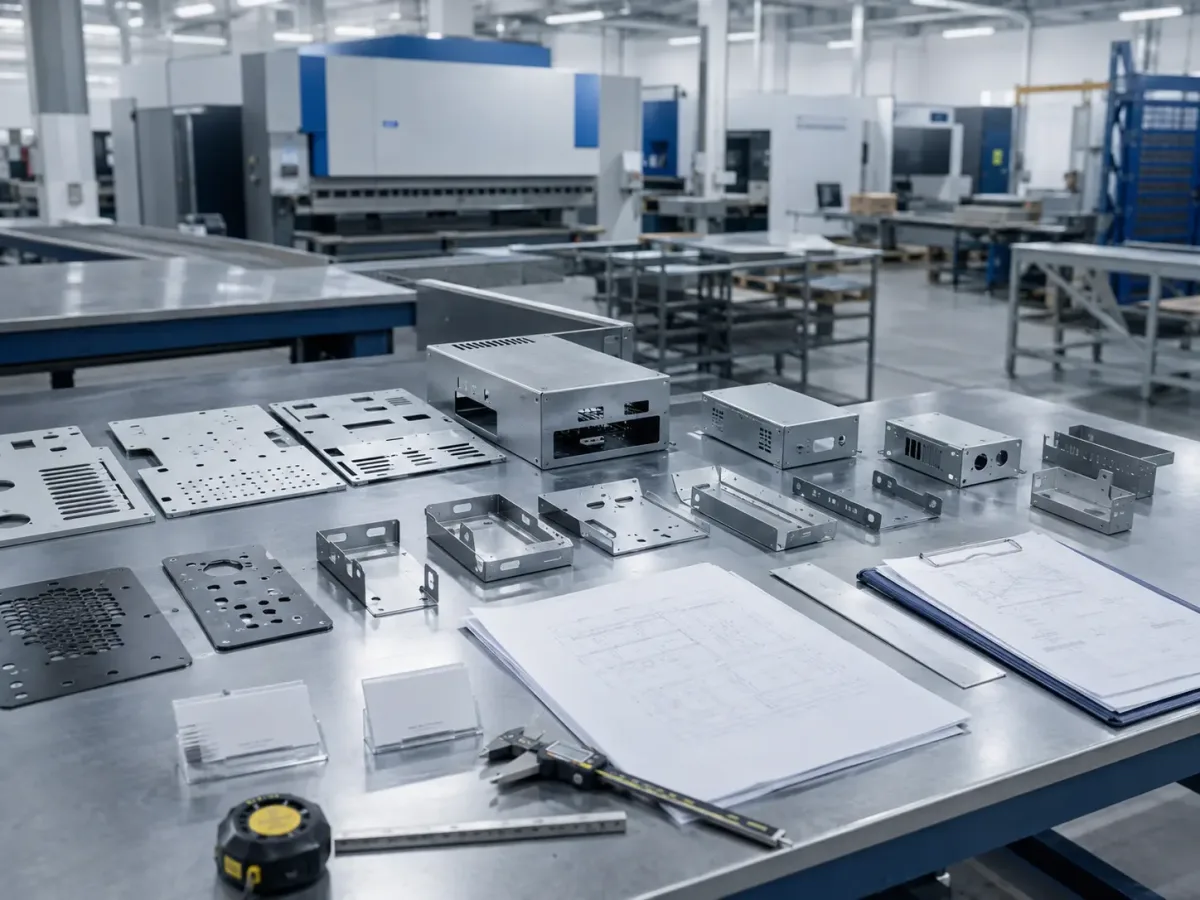
Schnellumsatz-Prototyping vs. Produktion: Ein 360°-Vergleich von Kosten, Tempo, Dokumentation und Abnahme
| Aspekt | Schnellumsatz-Prototyping | Produktion |
|---|---|---|
| Hauptziel | Design-Machbarkeit validieren und schnell iterieren | Konsistent liefern und Gesamtkosten optimieren |
| Typisches Volumen | 1–100 Stk. | Wiederholbare, gleichmäßige Chargen (oft 500/1.000+) |
| Stückkosten | Höher (begrenzte Skaleneffekte; geringere Rüst-/Werkzeugkosten zu amortisieren) | Niedriger (Skaleneffekte, optimierte Zykluszeit, amortisierte Werkzeuge) |
| Durchlaufzeit | Typischerweise gemessen in Tagen (abhängig von Material, Oberflächenbehandlung, Montage; einige Lieferanten können Prototypen in 2–5 Tagen liefern) | Hängt davon ab, ob dedizierte Werkzeuge/spezielle Vorrichtungen erforderlich sind—wenn ja, können sich die Durchlaufzeiten auf Wochen; verschieben; Schnellwerkzeuge sind oft etwa einige Wochen |
| Designänderungen | Flexibel, geringere Änderungskosten | Wenn Werkzeuge/Formen beteiligt sind, sind Änderungen in der Regel teurer |
| Qualitätsfokus | Validierungsgetrieben (CTQs können eng geprüft und nach Bedarf dokumentiert werden) | Konsistenz, Zuverlässigkeit und Rückverfolgbarkeit (um die Qualitätsziele der Kunden zu erfüllen) |
| Dokumentation | Schlankere Dokumentation, aber Revisionen werden über alle Iterationen hinweg nachverfolgt | Formell freigegebene Dokumente mit strenger Revisionskontrolle (PPAP nach Bedarf) |
Blechprototyping vs. 3D-Druck vs. CNC-Bearbeitung
Hinweis: “3D-Druck” bezieht sich hier auf Kunststoffe/Harze. Metall-3D-Druck ist eine separate Kategorie.
| Merkmal | Blechprototyping | 3D-Druck (Kunststoff) | CNC-Bearbeitung (Metall) |
|---|---|---|---|
| Materialrealismus | ✅ Verwendet häufig das finale Blechmaterial | ❌ In der Regel Kunststoff/Harz | ✅ Finales Material |
| Mechanische Leistung | ✅ Nahe am strukturellen Verhalten der Serienproduktion | ⚠️ Oft geringer; abhängig von Material/Verfahren | ✅ Hohe Festigkeit und Stabilität |
| Oberflächenbeschaffenheit | ✅ Kann auf nahezu serienreifes Erscheinungsbild gebracht werden | ⚠️ Erfordert in der Regel Nachbearbeitung | ✅ Hohe Oberflächenqualität (verfahrens-/nachbearbeitungsabhängig) |
| Kosten (pro Einheit) | 💰 Mittel | 💰 Niedrig | 💰💰 Höher (besonders bei komplexen Teilen) |
| Am besten für | Gehäuse, Halterungen, Chassis/Schränke, Panel-Passung & Montagevalidierung | Konzeptmodelle; schnelle Form-/Erscheinungsprüfungen | Präzisionsteile, Passflächen, komplexe 3D-Geometrie |
| Durchlaufzeit | ⚡ In der Regel 3–7 Tage (abhängig von Oberflächenbearbeitung/Montage) | ⚡ In der Regel 1–3 Tage | 🕐 In der Regel 5–10 Tage (abhängig von der Komplexität) |
Lieferzeiten variieren je nach Geometrie, Materialverfügbarkeit und Oberflächenanforderungen; viele Schnellfertigungsdienste beschreiben Blechprototypen mit Lieferung “in Tagen”, CNC-Aufträge mit Start in nur wenigen Werktagen und 3D-gedruckte Teile mit Lieferung innerhalb eines ähnlich kurzen Zeitraums.
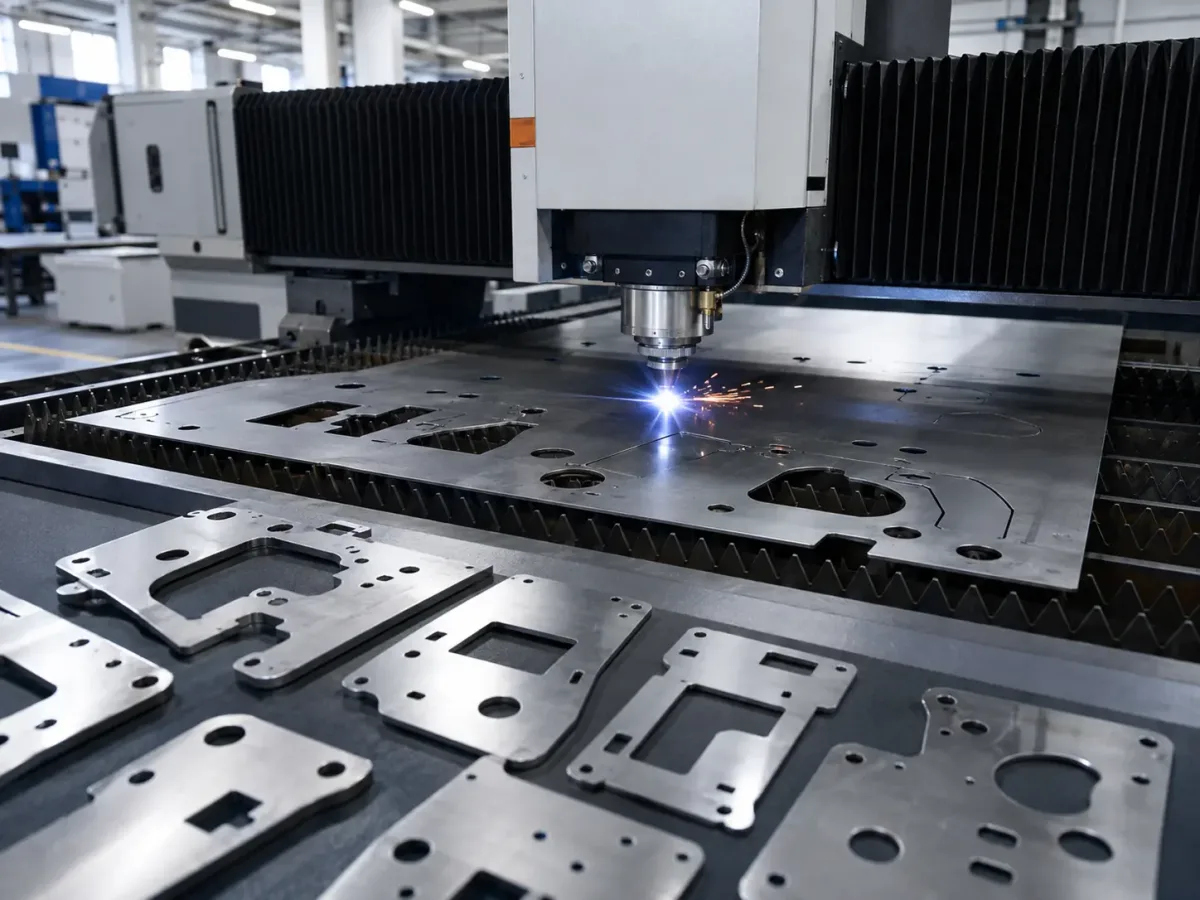
Schnelles Laserstrahlschneiden-Prototyping
Beim Laserstrahlschneiden wird ein hochenergetischer Laserstrahl für berührungsloses thermisches Schneiden entlang CAD-definierter Konturen auf einer Vielzahl von Metallen eingesetzt. Es verkürzt die Zeit vom Design bis zum fertigen Teil erheblich und unterstützt schnelle Revisionen – ohne den Bedarf an Hartwerkzeugen, wodurch die Vorlaufkosten unter Kontrolle bleiben. Da Prototypen aus serienmäßigem Blech hergestellt werden können, liegt die Leistung viel näher an den finalen Teilen. Laserstrahlschneiden bewältigt auch komplexe Profile, Ausschnitte und Lochmuster mühelos und ist damit eine Kernmethode für schnelles Blechprototyping.
Es ist ideal für 2D-Flachteile, Präzisionsprofilkomponenten und die schnelle Lieferung von Kleinserien (1–100 Stk.). Während der frühen Validierung können wir Prototypen schnell schneiden und Mehrversions-Iterationen unterstützen – damit Sie die DFM-Prüfung abschließen, Montageüberschneidungen prüfen, Lochausrichtung verifizieren und kosmetische Trends vor der Produktion bestätigen können. Wir können auch Biegen, Schweißen, Befestigungsmontage, Oberflächenbearbeitung und Montage nach Bedarf hinzufügen, zusammen mit Prüfungen kritischer Dimensionen und Revisionsempfehlungen, um Entwicklungszyklen zu verkürzen und Trial-and-Error-Kosten zu reduzieren. (DFM: Design for Manufacturability.)
Typische Schneidtoleranz (2D-Abmessungen): ±0,10–0,25 mm
Minimale Merkmalsgröße: 0,5 mm Lochdurchmesser; 0,1 mm Spalt
Standard prototype lead time: as fast as 1 day
Am besten geeignet für: EVT builds / engineering samples / fit-check validation / pre-approval samples / pre-pilot verification
Optional add-ons: Bending | Welding | Rivet nuts / Self-clinching hardware | Powder coating / Plating / Anodizing | Silkscreen / Laser marking
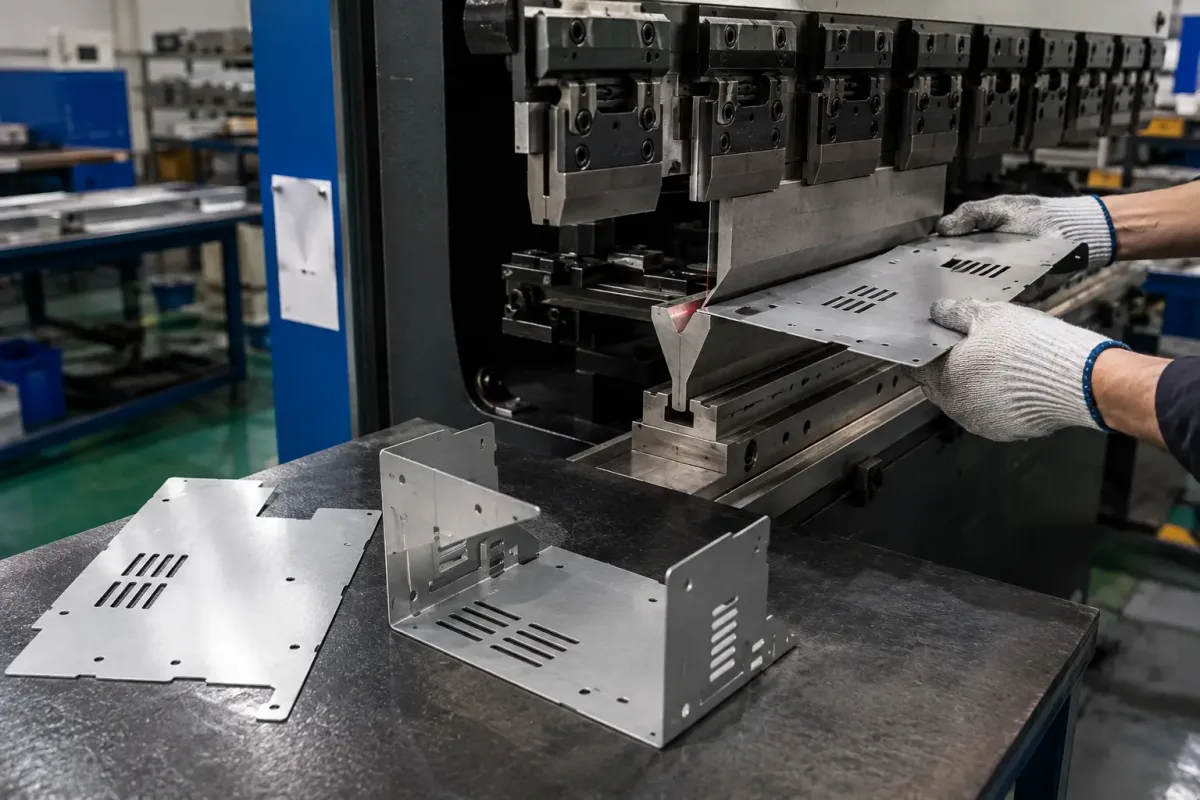
Schnelles Metallbiegen-Prototyping
Metal bending prototypes are formed on a press brake using tooling to plastically deform cut sheet metal into the required angles and shapes. This is the key step that turns a 2D sheet into a 3D part. It’s ideal for low-volume trial runs and pre-production validation—evaluating strength after bending, springback, surface quality, and assembly fit (e.g., chassis brackets, instrument housings).
This service is designed for the R&D and revision stages of sheet-metal structural parts. SR MFG supports multi-version, small-batch rapid iteration. To reduce rework, we perform a bending process review before release—aligning on bend radius, flat pattern dimensions, hole-to-bend distances, springback compensation, and assembly clearances—so prototypes are closer to production-ready.
Minimum bend angle: ≥30° (to be reviewed based on thickness and die opening)
Maximum bend angle: ≤180° (U-shapes/deep channels require special process evaluation)
Standard prototype lead time: 1–14 days (varies by bend count, complexity, and kitting)
Am besten geeignet für: EVT builds / fit-check validation / structural revisions / pre-pilot verification
Optional add-ons: Laser cutting | Self-clinching nuts/studs | Spot welding / TIG | Deburring | Powder coating / Plating | Silkscreen / Marking
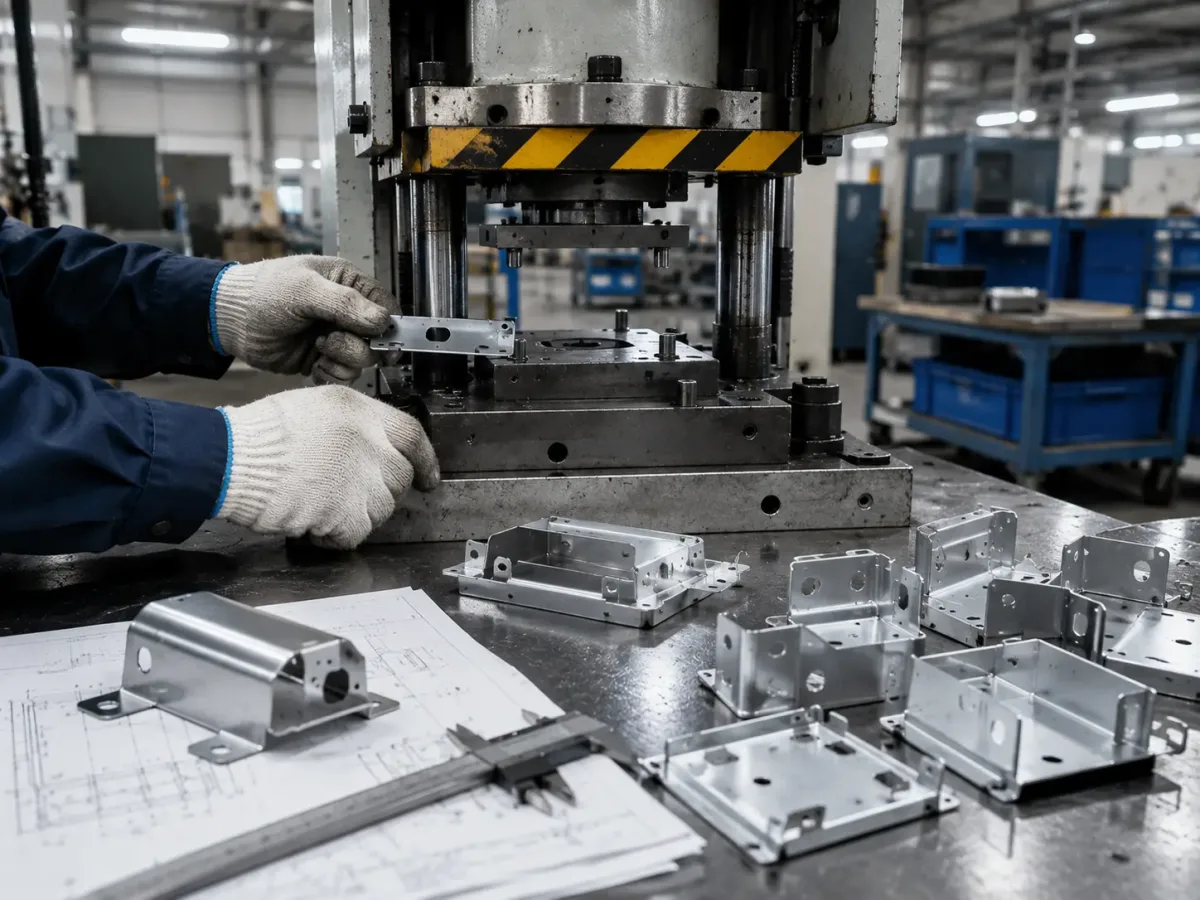
Schnelles Metallstanzen-Prototyping
Metal stamping rapid prototyping combines blanking, bending, drawing, and forming with quick-turn manufacturing to convert sheet metal into physical prototypes—either as single pieces or small batches. It’s fast, iteration-friendly, and supports materials such as stainless steel, carbon steel, and aluminum. It also scales well into production, offering strong cost efficiency once volumes increase.
With SR MFG, you’re not just getting “parts”—you’re getting a smoother validation path. We start with a manufacturability review to surface common issues early (hole positions, flange forming, burr direction, etc.), then trial with soft tooling or simplified tooling for quick builds. Materials are matched to project needs, and key dimensions can be recorded to speed up assembly and functional validation—reducing drawing revisions and rework so timelines stay predictable and budgets stay controlled.
Angle tolerance: ±0.5°–1° (based on part geometry and tooling review)
High precision (with fixtures/gauges): tolerances can be evaluated down to ±0.01–0.05 mm
Standard prototype lead time: 1–2 days (soft/simple tooling); production die stamping typically 2–4 weeks
Am besten geeignet für: EVT / engineering samples | structural validation | pre-approval samples | pre-pilot verification
Optional add-ons: Blanking | Bending | Deburring | Tapping | Self-clinching | Welding | Powder coating / Plating
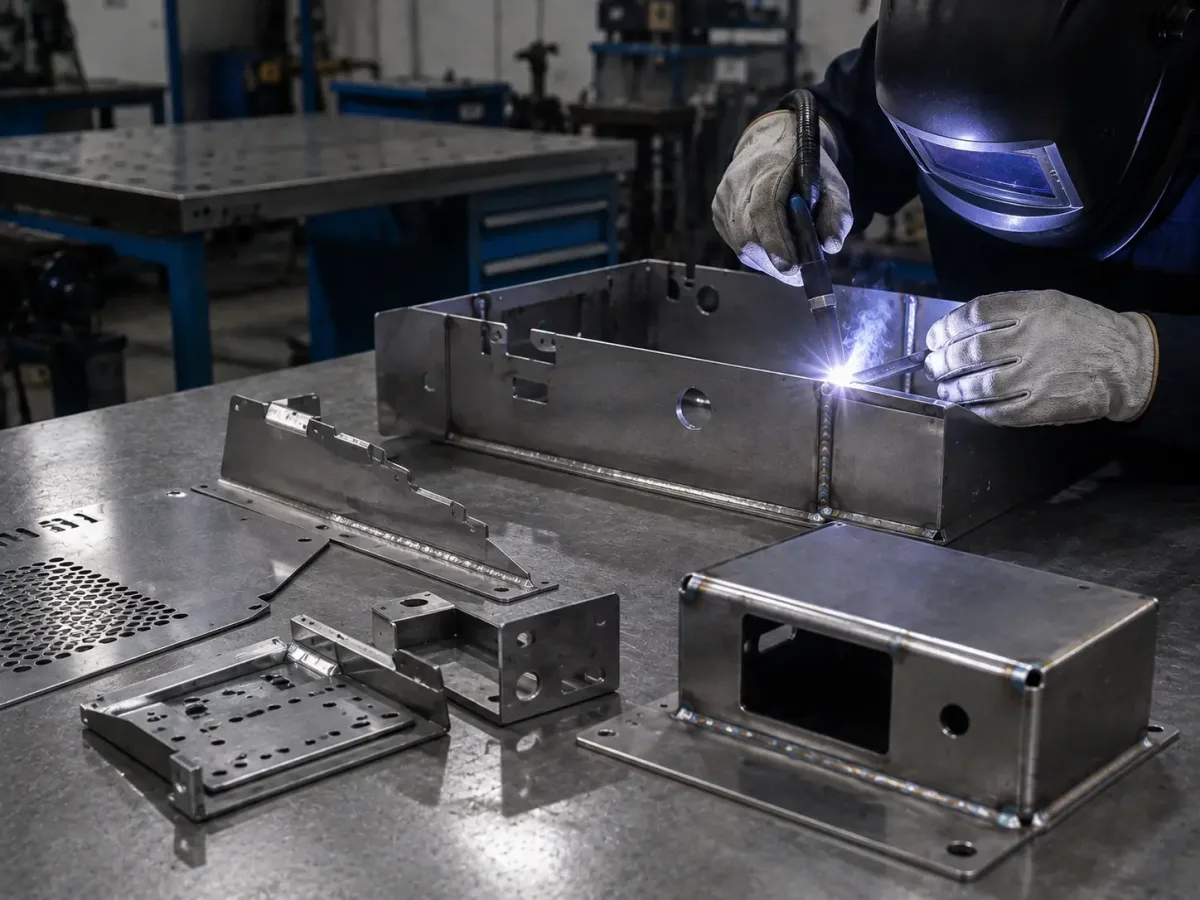
Schnelles Schweiß-Prototyping
Welding rapid prototyping combines fast welding with a quick-turn prototyping workflow to join and form parts quickly for structural validation and process trials. It verifies joint mechanical performance while ensuring structural reliability—and helps identify optimal welding parameters through rapid iteration, reducing risk before production through a tight “design–weld–test” loop.
With SR MFG, you can turn drawings into weldments that are ready to assemble and test sooner. We select the most suitable welding method based on the structure, surface key issues early in the prototype stage, and can provide critical-dimension measurements and first-article records to speed validation and minimize rework—keeping the project stable and costs under control.
Minimum sheet thickness: TIG 0.5 mm | MIG 1.0 mm | Laser welding 0.5 mm
Minimum fillet size: generally ≥ sheet thickness | ≥2.0 mm for thin sheet
Minimum bevel angle: 30° (with land)
Hole-to-edge distance: ≥1.5× thickness (guideline; confirmed in structure review)
Standard prototype lead time: 1–4 days (varies by quantity and complexity)
Schnelle Oberflächenbearbeitung für Metallprototypen
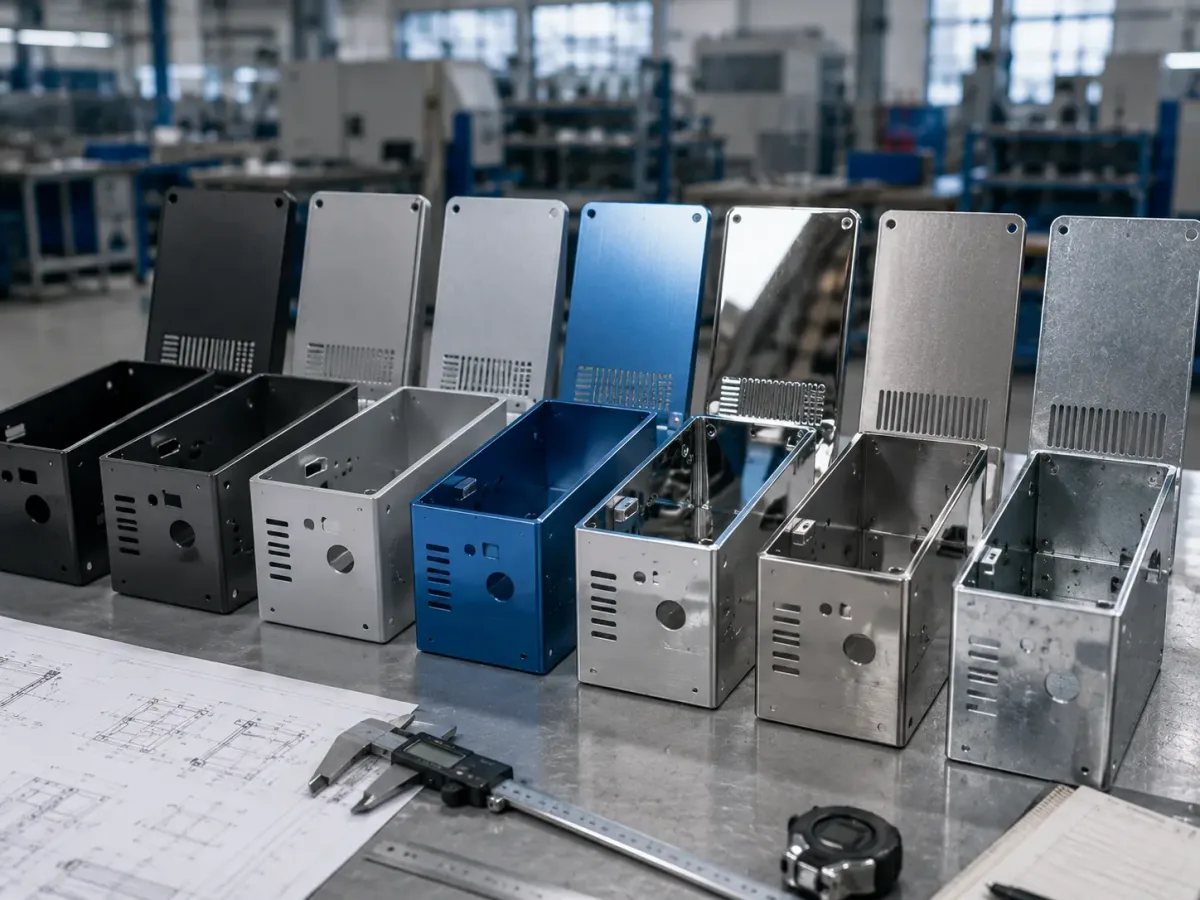
Rapid surface finishing for metal prototypes provides functional coatings, decorative finishes, and performance upgrades early in development. It helps you confirm “final-look” appearance up front while also validating performance requirements such as wear resistance, corrosion resistance, and insulation—reducing the risk of rework later due to process mismatch.
With SR MFG, you can lock down both appearance and performance during the prototype stage. We can quickly arrange powder coating, anodizing, electroplating, and more, and align color targets and acceptance criteria before processing to avoid rework. If corrosion resistance verification is required, salt spray testing can be performed per ASTM B117 and ISO 9227; test duration and pass/fail criteria should follow your product specification or a mutually agreed requirement.
For coating (powder/paint) thickness acceptance, ASTM D7091 can be referenced for non-destructive dry film thickness measurement using magnetic/eddy-current gauges.
Options: multiple colors, textures, and gloss levels
Design tip: radius sharp edges to R ≥ 0.5 mm to improve coating coverage and durability
Standard prototype lead time: 1–5 days (varies by quantity, partner capacity, and acceptance requirements)
What’s “Quick” About “Quick Prototyping,” Really?
When teams talk about quick-turn sheet metal prototyping, “fast” often gets oversimplified—people focus on just one aspect and miss the full picture. That typically leads to two common problems:
-
Some projects assume “fast” means everything can be done same-day, but lead time still depends on material availability, part complexity, finishing requirements, and more.
-
Others think “fast” simply means shipping is fast, overlooking the bigger value: rapid quoting, DFM feedback, iteration, and a tight verification loop.
Below is a practical breakdown of the most valuable “speed dimensions” in rapid prototyping:
| Dimension | Quick prototyping speed | Traditional manufacturing speed (requires tooling / dedicated fixtures) | Typical gap | Why it matters |
|---|---|---|---|---|
| Quote + DFM feedback | A few hours to within 24 hours | Several days to 1+ week | 2–5× | Lock in a manufacturable approach sooner and avoid dead ends |
| Time to first article (from approval to first part) | 2–7 days (often 2–5) | 2–8 weeks (incl. tooling + scheduling) | 4–10× | Get physical parts sooner to validate fit, assembly, and structure |
| Iteration cycle (ECO → next prototype revision) | 1–5 days | 2–6 weeks | 4–10× | Run design optimizations and A/B comparisons much faster |
| Design validation loop (issue found → fix → re-verify) | A few days to ~2 weeks | Several weeks to months | 3–8× | Surface risks earlier and reduce late-stage rework |
| Time-to-market compression | Weekly progress | Monthly progress | 2–4× | Reach pilot builds / customer validation sooner |
Hinweis: The ranges above are typical reference windows. “Traditional manufacturing” here refers to routes that require molds, dies, or dedicated fixtures. International shipping is not included. Actual timing depends on material availability, structural complexity, finishing, and assembly requirements.
SR MFG Turnkey Project Management
From the moment we receive your drawings, SR MFG assigns a dedicated project manager to own your metal manufacturing project end to end. One single point of contact coordinates everything—quoting, engineering review (DFM), production scheduling, in-process status updates, pre-shipment inspection, and packing/shipping.
Before production starts, we identify potential risks upfront and work to eliminate them. Throughout manufacturing, you’ll receive milestone updates, and with every shipment we can provide critical-dimension inspection records and shipping documentation—so your sheet metal parts arrive on time and are ready to use, easy to assemble, and easy to inspect and sign off.